
Maintaining crystal clear and sanitary water is the key to enjoying your hot tub. A crucial part of this maintenance routine is “shocking” the water to eliminate contaminants. While many commercial shock products exist, some owners wonder about using household items.
This guide will carefully explain how to shock a hot tub with bleach, a method that can be effective if done with extreme caution and precision. It is essential to understand that not all bleach is suitable, and incorrect application can damage your spa and pose health risks. This article will provide the necessary knowledge to perform this task safely.
Shocking your hot tub with bleach can be a practical and cost-effective alternative to commercial products, but it requires careful attention to detail. Understanding the proper steps, measurements, and precautions is crucial to ensure the process is safe for both your hot tub and your health. By following the guidelines provided, you can maintain clean, sanitized water while avoiding potential damage or hazards associated with improper use.
Why It Matters
Properly shocking your hot tub is vital for several reasons. The primary purpose is to sanitize the water by oxidizing and destroying organic waste, bacteria, and algae that regular sanitizer levels can’t handle. This waste comes from swimmers’ bodies (sweat, oils) and the environment.
Over time, these contaminants build up and can cause cloudy water, unpleasant odors, and skin irritation. Shocking breaks down these compounds, restoring water clarity and freshness. It also reactivates the primary sanitizer (like bromine or chlorine), making it more effective. Using an alternative like bleach requires precise knowledge to achieve these benefits without causing harm to your hot tub’s components or its users.
Step-by-Step Guide use the main keyword
This section provides a detailed, step-by-step process for this specific maintenance task. It is critical to follow these instructions precisely to ensure both your safety and the integrity of your hot tub. Missteps in this process can lead to improper sanitation or damage to your equipment. The following steps break down how to shock a hot tub with bleach into a safe and manageable procedure, emphasizing the correct type of bleach and accurate measurements for a successful outcome.
Step 1: Choose the Right Kind of Bleach
This is the most critical step. You must use only plain, unscented household bleach that lists its active ingredient as sodium hypochlorite (typically 5-8% concentration). Do not use any bleach that is “splash-less,” “color-safe,” scented, or contains any other added detergents or chemicals.
These additives will create a foamy mess in your hot tub, cloud the water, and can be harmful to both you and your spa’s plumbing and shell. Always read the label carefully to confirm you have a simple, pure sodium hypochlorite solution before you proceed.
Step 2: Calculate the Correct Amount
Precision is key to avoiding damage or ineffective treatment. The amount of bleach needed depends on your hot tub’s volume (in gallons) and the concentration of the sodium hypochlorite in your bleach. A general rule of thumb is to use a specific formula to raise the free chlorine level to the shock range of 10-20 parts per million (ppm).
Online chlorine calculators are invaluable tools for this. You will input your spa’s volume, your current free chlorine level, and your target level to get a precise measurement. Never guess, as adding too much can be corrosive and adding too little will be ineffective.
Step 3: Prepare the Hot Tub
Before adding any chemicals, prepare the hot tub itself. First, remove the hot tub cover to allow the water to off-gas during the shocking process. Turn on the jets and ensure all air valves are open. This creates circulation, which is essential for distributing the bleach evenly throughout the entire body of water.

Good circulation prevents concentrated “hot spots” of bleach that could potentially damage the acrylic shell of your spa. Let the pumps run for the entire duration of the initial shocking phase to ensure thorough mixing.
Step 4: Dilute and Add the Bleach
Never pour bleach directly into your hot tub water. This concentrated chemical can bleach or damage the acrylic surface. Instead, you must pre-dilute it. Put on protective gloves and eyewear. Take a clean, 5-gallon plastic bucket and fill it with warm water from your hot tub.
Carefully measure and pour the calculated amount of bleach into the bucket of water, not the other way around, to prevent splashing. Slowly and carefully pour the diluted mixture from the bucket into your hot tub, distributing it around the perimeter of the spa while the jets are running.
Step 5: Test the Water After Shocking
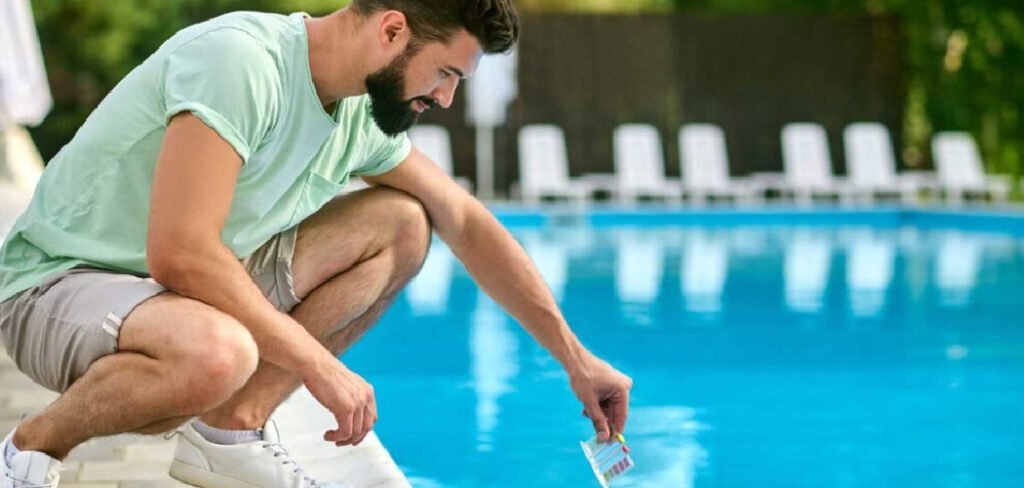
After adding the diluted bleach, allow the jets to run for at least 20-30 minutes to ensure it is fully circulated. Then, turn off the jets and let the water sit. You must wait until the free chlorine level has dropped back down to a safe range of 1-3 ppm before anyone can use the hot tub. This can take several hours or even up to a day. Use a reliable test kit or test strips to monitor the chlorine levels periodically. Entering the water when chlorine levels are high can cause severe skin, eye, and respiratory irritation.
Step 6: Adjust pH and Alkalinity
Shocking the water, especially with a high-pH substance like bleach, will almost certainly raise your water’s pH and total alkalinity levels. After the free chlorine has returned to a safe range, you must test these levels. Ideal pH for a hot tub is between 7.4 and 7.6, and total alkalinity should be between 80 and 120 ppm.
If the levels are high, you will need to use a pH decreaser (like sodium bisulfate) to bring them back into the proper range. Balanced water chemistry is crucial for bather comfort and protecting your equipment.
Step 7: Clean Your Filters
The shocking process breaks down a large volume of contaminants, and your filter is responsible for catching all that debris. A day after shocking the spa, it is an excellent practice to remove and thoroughly clean your hot tub filters.
This prevents the newly captured gunk from being held in the system, which would reduce filter efficiency and potentially reintroduce contaminants back into the water. A clean filter ensures your water stays clearer for longer after the shock treatment and helps your system run optimally.
Common Mistakes to Avoid
The most dangerous mistake is using the wrong type of bleach. Scented, splash-less, or gel-based bleach products contain additives that will foam excessively and disrupt water chemistry, potentially damaging your spa. Always use plain, unscented sodium hypochlorite. Another common error is poor measurement. “Eyeballing” the amount can lead to ineffective sanitation or dangerously high chlorine levels that can corrode equipment and irritate skin.
Pouring bleach directly into the spa without diluting it is also a frequent mistake that can permanently stain or etch the acrylic shell. Finally, a critical error is allowing people to use the hot tub too soon. You must wait until the free chlorine level has returned to a safe 1-3 ppm, a process that can take many hours.
Frequently Asked Questions (FAQ)
How Often Should I Shock My Hot Tub?
You should shock your hot tub approximately once a week, or more often with heavy use. Regular shocking helps eliminate contaminants that build up over time. It is also a good idea to shock the spa after having a large group of people use it or if the water starts to look cloudy or develop an odor.
Can I Use Pool Shock In My Hot Tub?
While both are used for sanitation, it is not always advisable. Pool shock is often much more concentrated than hot tub shock. Using it can easily lead to over-chlorination in the small volume of a hot tub, potentially damaging components. If you do use it, you must calculate the dose with extreme care. Following the steps for how to shock a hot tub with bleach is a specific process that differs from using pool shock.
What’s The Difference Between Chlorine Bleach And Non-Chlorine Shock?
Chlorine bleach (and chlorine shock) raises the free chlorine level significantly to sanitize the water. Non-chlorine shock, often potassium monopersulfate (MPS), is an oxidizer. It breaks down organic waste but does not act as a primary sanitizer or raise chlorine levels. MPS is great for a quick weekly “refresh” but is not as powerful for clearing up serious contamination.
How Long After Shocking With Bleach Can I Use The Hot Tub?
You must wait until the free chlorine level drops to a safe range of 1-3 ppm. This can take anywhere from a few hours to over 24 hours, depending on the amount of bleach used and factors like sunlight exposure. Always test the water before allowing anyone to enter. High chlorine levels can cause significant skin and eye irritation.
Will Bleach Damage My Hot Tub Cover?
The off-gassing that occurs during a chlorine shock can be corrosive to the underside of your hot tub cover over time. This is why it is recommended to leave the cover completely off for at least the first hour after adding the shock, and ideally until the chlorine level has begun to drop significantly. This allows the strongest gases to dissipate.
Conclusion
Using household bleach to shock your hot tub is a method that demands precision, caution, and a thorough understanding of the process. By selecting only plain, unscented bleach, calculating the exact amount needed, and following a careful dilution and application procedure, you can effectively sanitize your spa water.
Always remember that safety is the top priority—for yourself during the process and for everyone who will enjoy the hot tub afterward. Test your water chemistry before and after, and never rush the process. Armed with this knowledge, you can make an informed decision about your hot tub maintenance routine.

About
Jovie Mathews is a backyard and outdoor expert writer with over 12 years of hands-on experience transforming neglected outdoor spaces into thriving gardens and functional retreats. Raised in a family where weekends meant digging in the soil and building raised beds from scratch, Jovie developed a genuine love for the outdoors long before it became a career.
She writes with a practical, no-fluff approach — always testing ideas in her own backyard before sharing them with readers. From composting systems and native plant selection to patio design and pest control, Jovie covers the full spectrum of backyard life with equal parts expertise and enthusiasm.
Education
B.Sc. in Horticulture Science
University of Florida (UF) · Gainesville, FL · 2014
IFAS College of Agricultural and Life Sciences
Minor in Environmental Studies
University of Florida (UF) · Gainesville, FL · 2014
College of Liberal Arts and Sciences
Areas of expertise
- Lawn & Garden Care
- Soil prep, planting, seasonal care
- Outdoor DIY Projects
- Raised beds, fencing, pathways
- Composting & Soil Health
- Organic methods, amendments
- Native Plants & Wildlife
- Pollinators, habitat gardening
When she is not writing, Jovie can be found testing new composting techniques, growing tomatoes in questionable quantities, or convincing her neighbors that clover lawns are actually a great idea. She currently gardens in the Pacific Northwest.