
Gardening offers immense satisfaction, but the constant battle against weeds can quickly turn enthusiasm into exhaustion. Many beginners find themselves crawling on their hands and knees with a hand trowel, unaware that a more efficient method exists. Standing upright and working with rhythm is the secret to maintaining a large plot without suffering from backaches. To transform this chore into a manageable and even enjoyable task, you simply need to understand how to use a garden hoe properly.
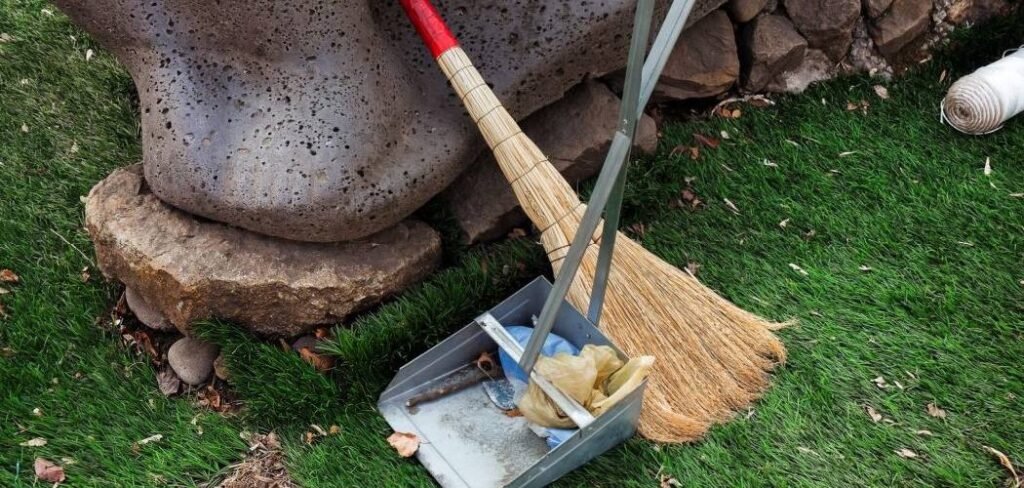
This tool has been a staple in agriculture for thousands of years for good reason. It allows you to cover large areas of ground quickly, severing weed roots and aerating the soil surface with minimal effort. In this guide, we will explore the techniques, posture, and maintenance tips that will turn you into a weeding expert. By mastering these fundamentals, you will save time and energy while keeping your garden pristine.
Why Correct Hoeing Technique Matters
Understanding the mechanics behind this garden tool is about more than just killing weeds; it is about preserving your body and your soil. When gardeners use incorrect form—such as chopping aggressively into the dirt or hunching over the handle—they create unnecessary strain on their lower back and shoulders. This turns a simple fifteen-minute task into a painful ordeal that requires days of recovery. Proper technique leverages leverage and momentum rather than brute strength, making the work feel light and fluid.
8 Step-by-Step Guide on How to Use a Garden Hoe
Step 1: Select the Right Hoe for the Job
Before you step into the garden, you must ensure you are holding the correct tool for your specific soil conditions and weed types. A standard draw hoe, often called a paddle hoe, features a blade set at a right angle to the handle and is excellent for chopping stubborn, established weeds or moving soil to hill potatoes. However, for general maintenance and light weeding, a scuffle or stirrup hoe is often superior because it cuts on both the push and pull strokes.
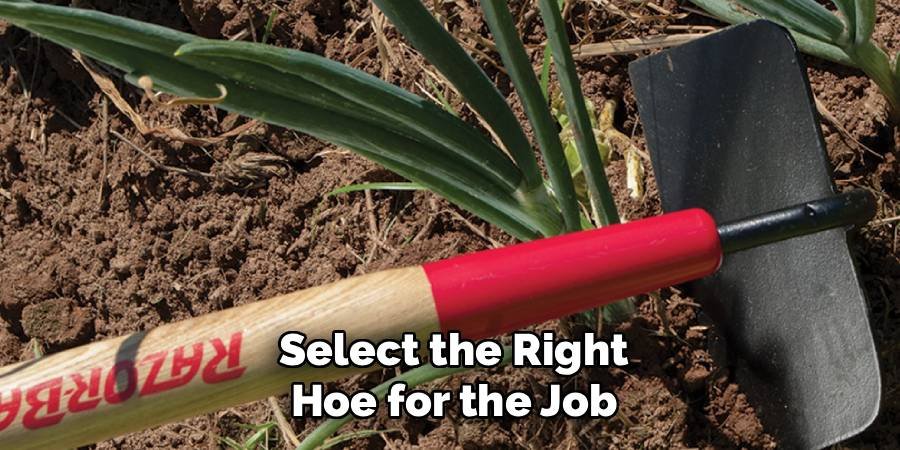
Using a heavy chopping tool for delicate surface weeding will tire you out quickly. Assess the density of the vegetation you need to clear. If you are dealing with tall, woody invaders, select a heavier blade. For young, tender sprouts, a lightweight oscillating hoe is the most efficient choice for conserving your energy.
Step 2: Inspect and Sharpen the Blade
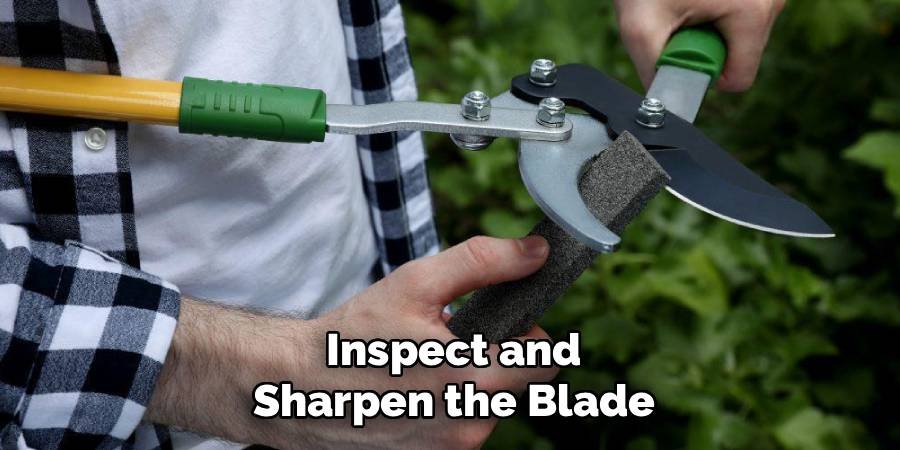
A dull garden tool is a dangerous and ineffective one because it requires excessive force to operate, leading to slips and potential injury. Before you begin working, take a moment to inspect the cutting edge of your hoe for rust, nicks, or dullness. You want a blade that slices through plant stems cleanly rather than tearing or bludgeoning them. Use a mill file or a sharpening stone to hone the edge, following the original bevel angle of the metal.
You do not need a razor-sharp edge like a kitchen knife, but it should be sharp enough to catch your fingernail. Regular maintenance ensures that the tool does the hard work for you. If you skip this crucial preparation step, you will find yourself hacking at the ground repeatedly, which defeats the purpose of learning efficient weeding techniques.
Step 3: Adopt the “Dancer’s Stance”
Your body position is the foundation of effective gardening, and poor posture is the leading cause of fatigue. Stand tall with your spine straight and your feet shoulder-width apart to create a stable base. Avoid the common mistake of bending over at the waist to reach the ground, as this places immense leverage on your lower back. Instead, keep your knees slightly bent and hinge slightly from your hips if necessary, but rely primarily on the length of the handle to reach the soil.
Think of your stance as athletic and ready for movement, similar to a golfer or a dancer. You should feel balanced and able to shift your weight easily from one foot to the other. This upright posture allows you to work for extended periods without pain, transforming the activity into a healthy, low-impact workout.
Step 4: Master the Thumbs-Up Grip
The way you hold the handle dictates how much power and control you have over the hoe head. Place your dominant hand near the top of the handle and your other hand roughly two feet further down to create a comfortable lever. Crucially, you should hold the handle with a “thumbs-up” grip, where both thumbs are pointing toward the top of the handle rather than wrapping around it like a baseball bat.
This ergonomic grip keeps your wrists in a neutral position and reduces strain on your forearms. It also encourages an upright posture because it prevents you from instinctively leaning forward. A relaxed grip is essential; squeezing the wood too tightly will cause blisters and hand cramping. Let the tool rest easily in your palms so you can manipulate it with finesse rather than brute force.
Step 5: Position the Blade Correctly
Success depends on how the metal meets the soil, and this varies slightly depending on the tool you chose in the first step. For a standard draw hoe, the blade should enter the soil at a shallow angle, roughly parallel to the surface, rather than striking it vertically like an axe. If you are learning how to use a garden hoe with a scuffle or stirrup design, the blade should rest flat against the earth.
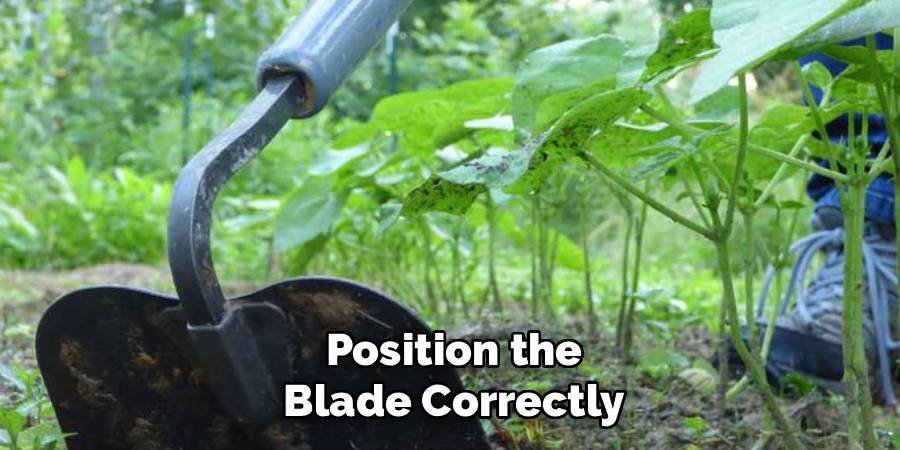
The goal is to skim just beneath the surface, slicing the weeds at their crown where the stem meets the roots. Beginners often make the mistake of hacking deeply into the dirt, which moves too much earth and brings new weed seeds to the surface. Visualize shaving the ground rather than digging a hole. Precision is key here, ensuring you disturb only the top inch of soil.
Step 6: Execute the Push-Pull Motion
The actual movement of hoeing should be fluid and rhythmic, utilizing the muscles of your core and arms rather than just your wrists. If you are using a stirrup or loop hoe, slide the tool forward and backward in a smooth, reciprocating motion. The blade will cut through weed stems on both the push and the pull, maximizing your efficiency. For a traditional draw hoe, use a pulling motion to slice weeds toward you, then lift and reset.
Avoid raising the hoe high in the air; keep the movements compact and close to the ground. This conserves energy and increases safety. As you work, shift your weight between your feet, using your legs to drive the motion. This full-body integration makes the work feel effortless and allows you to clear large rows of vegetables in a fraction of the time it takes to hand-pull.
Step 7: Maintain Shallow Depth Control
One of the most difficult habits to break is the urge to dig deep, but shallow cultivation is the hallmark of an expert gardener. You only need to penetrate the top half-inch to one inch of soil to kill most annual weeds. Going deeper than this is counterproductive because it brings moisture to the surface where it evaporates, drying out your soil.
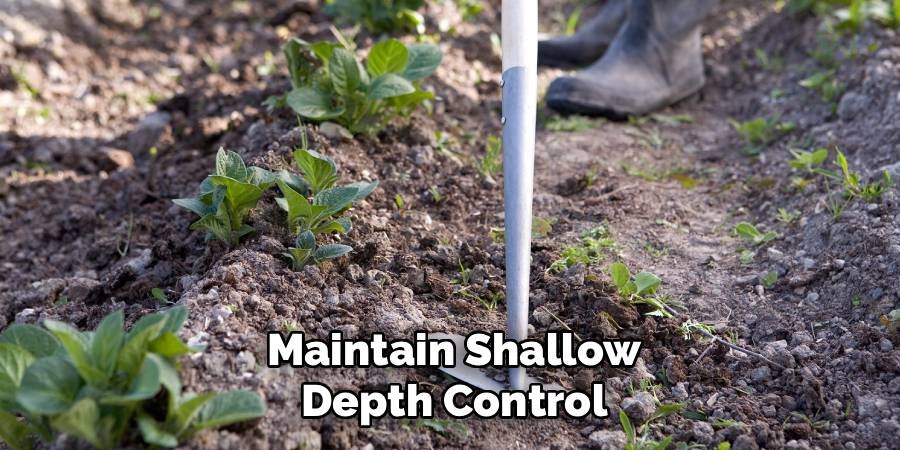
Deep hoeing also risks slicing into the shallow feeder roots of your prized vegetables and flowers. Focus on keeping the blade consistent in its depth, effectively severing the weed tops from their roots. If the weeds are small, simply unsettling them from the soil is often enough to kill them as they dry out in the sun. This technique, often called “dust mulching,” creates a loose top layer that prevents new weeds from germinating while preserving soil structure.
Step 8: Navigate Around Plants Carefully
Working close to your established crops requires a steady hand and a high degree of focus to avoid accidental damage. When you approach the base of a tomato plant or a row of lettuce, slow down your rhythm and shorten your strokes. Use the corners of the hoe blade for precision work, carefully hooking out weeds that are growing right next to the crop stems.
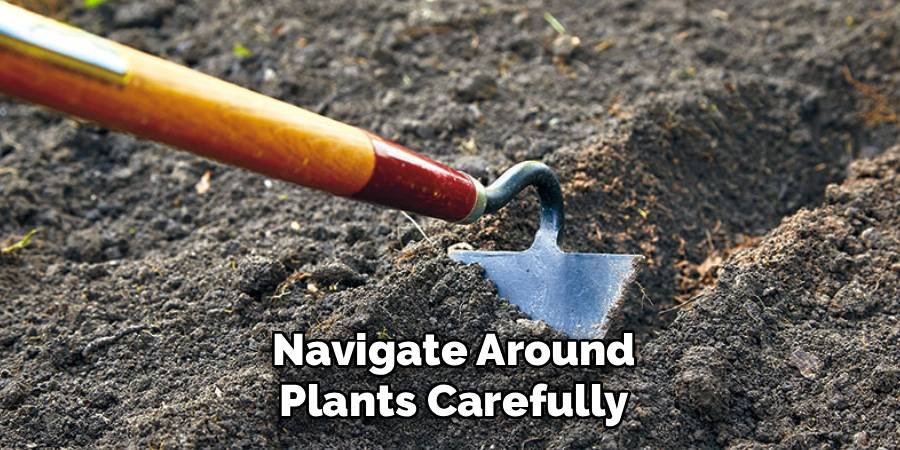
It is often helpful to guide the hoe with your forward hand while your back hand acts as a pivot point for fine control. If a weed is growing intimately close to a vegetable, it may be safer to pull that single weed by hand rather than risking the hoe blade. Patience in these tight spaces prevents the heartbreak of accidentally severing a productive plant. Treat this part of the process like surgery, where accuracy is far more important than speed.
Frequently Asked Questions
How Often Should I Sharpen My Garden Hoe?
You should sharpen your garden hoe every time you use it, or at least every few sessions if the soil is soft. Keep a mill file handy and give the edge a few strokes before you start weeding. A sharp edge drastically reduces the physical effort required and cuts weeds cleanly. If you hit rocks frequently, check for nicks and file them out immediately to maintain a smooth cutting edge.
Can I Use a Hoe in Wet Soil?
It is generally best to avoid hoeing when the soil is wet or muddy. Walking on wet soil compacts it, damaging the structure, and wet dirt tends to clump to the blade, making the tool heavy and ineffective. Furthermore, weeds that are sliced in wet soil often re-root themselves easily. Wait until the soil is dry and crumbly; the weeds will die much faster when cut and left on the dry surface.
Will Hoeing Damage My Vegetable Roots?
Yes, it can if you are not careful with your depth. Most vegetable plants have feeder roots very close to the surface. To avoid damage, ensure you are practicing shallow cultivation, only penetrating the top inch of the soil. When working very close to the base of your plants, slow down and use the corner of the blade, or switch to hand-pulling for the weeds directly touching your crops.
What Is the Difference Between a Draw Hoe and a Scuffle Hoe?
A draw hoe (or paddle hoe) has a blade set at a 90-degree angle and is designed to be pulled toward you to chop weeds or move soil. A scuffle hoe (or stirrup hoe) has a looped blade that oscillates and cuts on both the push and pull strokes. Scuffle hoes are generally better for maintenance weeding, while draw hoes are better for larger weeds and moving dirt.
Why Does My Back Hurt After Hoeing?
Back pain usually results from poor posture, specifically bending over at the waist or using a handle that is too short. To prevent pain, stand upright with your knees slightly bent and use a long-handled tool that allows you to reach the ground without hunching. Engage your core and use your arms and legs to generate movement rather than pivoting from your lower back.
Conclusion
Mastering the art of weeding is a milestone for any home gardener. It shifts the focus from the drudgery of chore work to the satisfaction of maintaining a healthy, thriving ecosystem. By selecting the right tool, maintaining a sharp edge, and adopting an ergonomic stance, you protect your body and your soil structure simultaneously. Remember that consistency is key; frequent, shallow weeding is far easier than battling overgrown jungles of vegetation.
As you head out to your garden, apply these steps and focus on your rhythm. You will likely find that what was once a dreaded task becomes a peaceful part of your daily routine. Take the time to practice how to use a garden hoe correctly, and your back, your plants, and your harvest will thank you for it.

About
Jovie Mathews is a backyard and outdoor expert writer with over 12 years of hands-on experience transforming neglected outdoor spaces into thriving gardens and functional retreats. Raised in a family where weekends meant digging in the soil and building raised beds from scratch, Jovie developed a genuine love for the outdoors long before it became a career.
She writes with a practical, no-fluff approach — always testing ideas in her own backyard before sharing them with readers. From composting systems and native plant selection to patio design and pest control, Jovie covers the full spectrum of backyard life with equal parts expertise and enthusiasm.
Education
B.Sc. in Horticulture Science
University of Florida (UF) · Gainesville, FL · 2014
IFAS College of Agricultural and Life Sciences
Minor in Environmental Studies
University of Florida (UF) · Gainesville, FL · 2014
College of Liberal Arts and Sciences
Areas of expertise
- Lawn & Garden Care
- Soil prep, planting, seasonal care
- Outdoor DIY Projects
- Raised beds, fencing, pathways
- Composting & Soil Health
- Organic methods, amendments
- Native Plants & Wildlife
- Pollinators, habitat gardening
When she is not writing, Jovie can be found testing new composting techniques, growing tomatoes in questionable quantities, or convincing her neighbors that clover lawns are actually a great idea. She currently gardens in the Pacific Northwest.