
It can be frustrating to look out at your beautiful lawn only to see it covered in unsightly and unsanitary goose droppings. These large birds, while majestic in flight, can quickly turn a pristine yard into a messy minefield. For homeowners, gardeners, and families who enjoy their outdoor space, this is more than just an inconvenience; it’s a genuine problem that can ruin the enjoyment of your property.
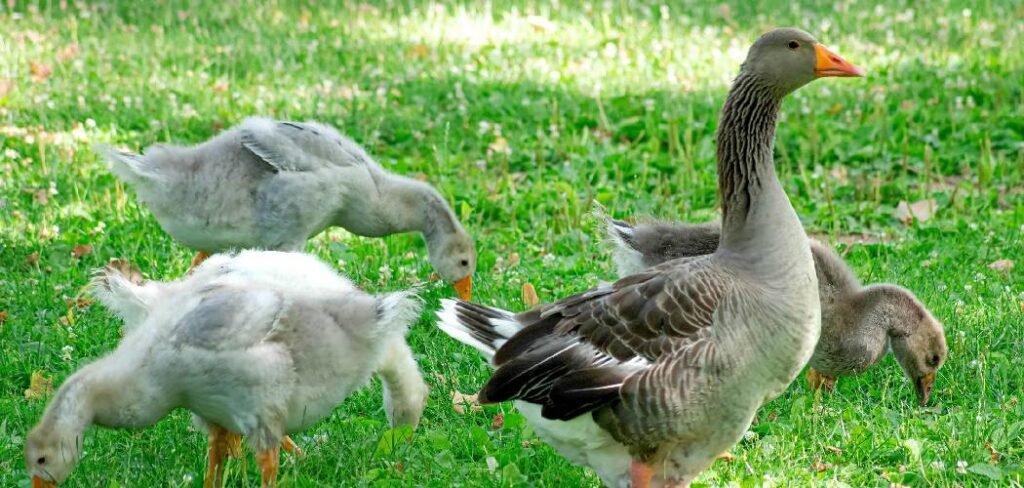
Fortunately, there are effective strategies you can use. Learning how to stop geese from pooping in yard is about understanding their behavior and implementing a few simple, humane deterrents to encourage them to find a more suitable place to graze and rest. This guide will walk you through everything you need to know to reclaim your lawn and keep it clean for good.
Why Geese Poop in Yards
Geese are naturally drawn to open, grassy areas, and your well-maintained lawn often looks like the perfect five-star resort to them. The primary reason they choose your yard is for food and safety. Manicured lawns provide a plentiful source of tender, nutrient-rich grass, which is a staple of their diet. They can graze for hours on a well-watered suburban lawn.
Safety is another major factor. Geese prefer locations with a clear line of sight, allowing them to spot predators from a distance. A wide-open yard, especially one near a pond, lake, or other water source, offers the ideal combination of food, water, and security. They feel safe when they can see any potential threats approaching, giving them ample time to escape into the water or take flight. This combination of an easy meal and a secure environment makes your property an irresistible stopover, leading to the inevitable and messy problem of goose droppings.
8 Step-by-Step Guide on How to Stop Geese From Pooping in Yard
Step 1: Make Your Lawn Less Appetizing
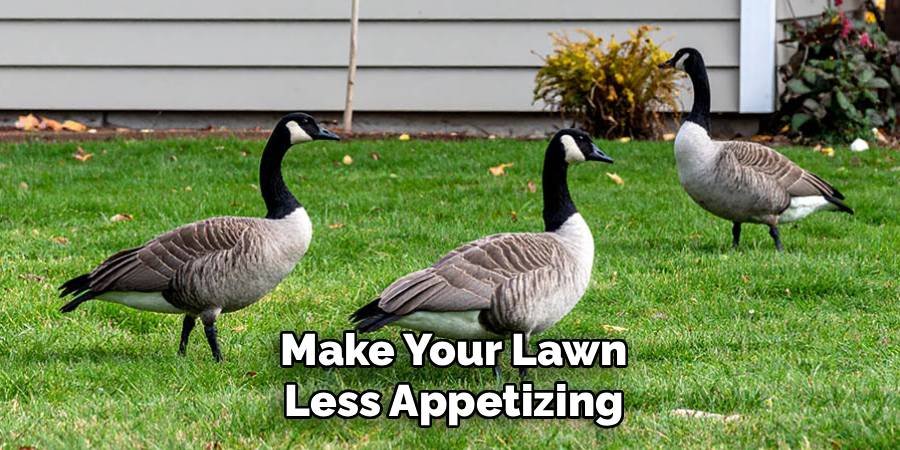
The first step in deterring geese is to remove their primary motivation: food. Geese love the tender, high-nutrient grass found in many residential lawns. You can make your yard less appealing by switching to a different type of grass that they find less tasty, such as tall fescue or perennial ryegrass. Additionally, avoid over-fertilizing your lawn. Fertilizers, especially those high in nitrogen, create the lush, delicious growth that geese crave. By reducing fertilizer use, you make the grass less palatable. This simple change in your lawn care routine can be a powerful, passive deterrent that encourages geese to look for a better meal elsewhere.
Step 2: Use Visual Scare Tactics
Geese are cautious birds and are easily spooked by perceived threats. You can use this to your advantage by placing visual deterrents around your property. Predator decoys, such as those of coyotes, owls, or foxes, can be very effective. The key is to move them every few days; geese are smart and will quickly realize a decoy is fake if it never changes position. Other visual scares include Mylar scare tape, which flashes in the sunlight and makes noise in the wind, or specialized flags designed to frighten birds. Placing these items strategically around the areas where geese congregate can create an environment that feels unsafe for them.
Step 3: Install Physical Barriers
Creating physical barriers is a highly effective way to prevent geese from accessing your lawn, especially if your property borders a body of water. A simple fence can be surprisingly effective. A low, two-foot-high fence, such as a wire or string grid, is often enough to do the trick. Geese prefer to walk from the water onto the grass, and a simple barrier can disrupt this pattern, making your yard too much trouble to enter. For a less obtrusive option, consider installing a grid of taught string or wire about a foot off the ground across the shoreline or main entry points to your yard.
Step 4: Disrupt Their Comfort with Sprinklers
One of the most effective and humane ways to encourage geese to leave is by making their stay uncomfortable. Motion-activated sprinklers are an excellent tool for this purpose. These devices connect to your garden hose and use an infrared sensor to detect movement. When a goose walks into the sensor’s range, it releases a sudden, startling burst of water.
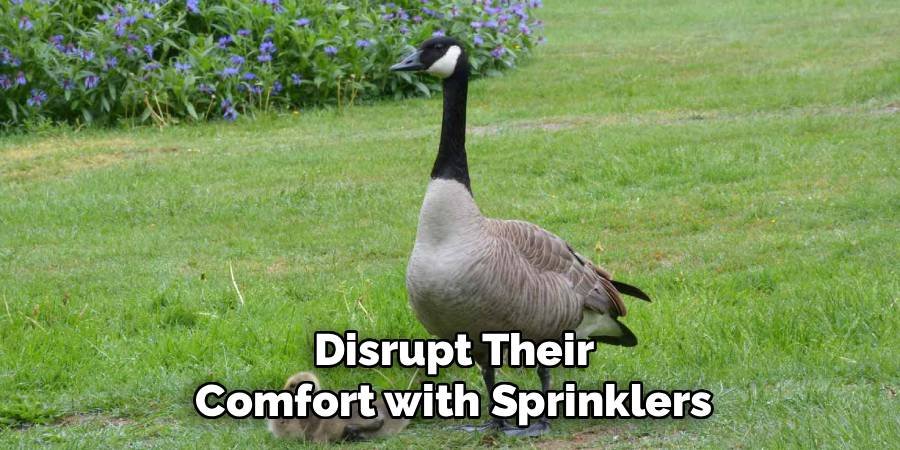
This unexpected spray is harmless but highly effective at frightening geese away. Placing several sprinklers around popular resting spots ensures that wherever they try to settle, they are met with an unpleasant surprise, teaching them that your yard is not a peaceful place to relax.
Step 5: Utilize Sound Deterrents
In addition to visual scares, sound can be a powerful deterrent. Geese have specific distress and alarm calls that signal danger to the rest of the flock. You can purchase and play recordings of these calls from sonic repellent devices. When geese hear these sounds, their natural instinct is to flee the perceived danger. For this method to remain effective, the sounds should be played at random, irregular intervals. This prevents the birds from becoming accustomed to a predictable pattern. The goal is to create an auditory environment that is consistently unsettling, reinforcing the idea that your yard is not a safe haven.
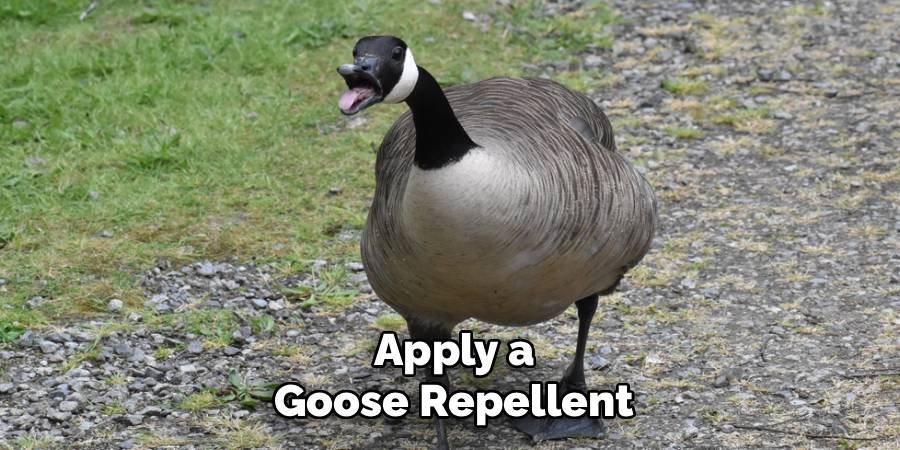
Step 6: Apply a Goose Repellent
For a direct approach, consider using a commercially available goose repellent. Most of these products are made from a non-toxic, food-grade ingredient called methyl anthranilate, which is derived from concord grapes. While harmless to the geese, it irritates their trigeminal nerve, creating an unpleasant sensation when they eat treated grass. To humans, it has a mild grape-like smell, but to geese, it makes their food source taste terrible. You simply spray the repellent on the grass in areas where geese feed. After a few tastes, they will associate your lawn with this bad experience and learn to avoid it.
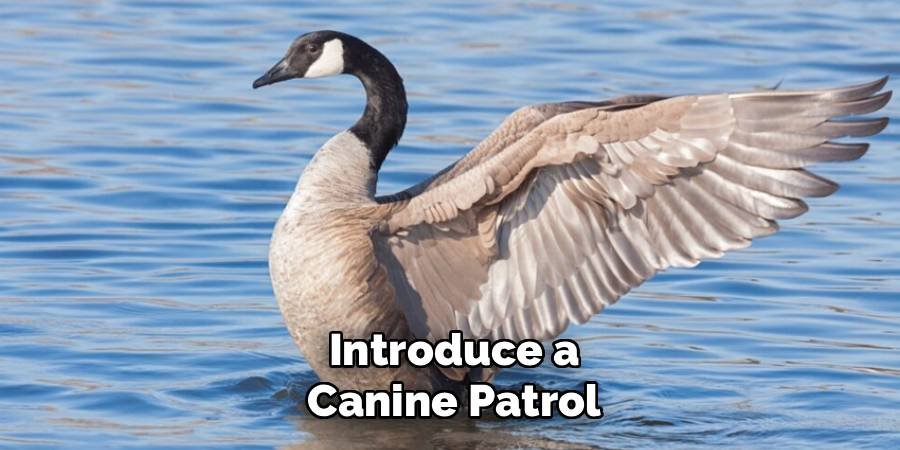
Step 7: Introduce a Canine Patrol
If you’re a dog owner, you already have one of the best goose deterrents available. A dog, particularly a breed with herding instincts like a border collie, can be incredibly effective at chasing geese away. The mere presence of a dog patrolling the yard is often enough to make geese feel unsafe. Letting your dog out frequently, especially during the early morning and late afternoon when geese are most active, will disrupt their routine. The consistent harassment from a “predator” will quickly convince the flock that your yard is not a suitable or safe place for them to graze and rest.
Step 8: How to Stop Geese From Pooping in Your Yard with Landscaping
Strategic landscaping can make your property fundamentally less attractive to geese. These birds prefer wide-open spaces with clear sightlines. You can break up these open areas by planting shrubs, ornamental grasses, or creating garden beds along shorelines and across large expanses of lawn. This type of landscaping obstructs their view, making them feel vulnerable to predators. Geese will be hesitant to enter an area where they can’t see what might be hiding. By reducing the open, runway-like feel of your yard, you remove the sense of security they seek, making your property a much less desirable destination.
Frequently Asked Questions (FAQ)
Is Goose Poop Harmful to Humans or Pets?
While direct transmission of disease from goose droppings to humans is rare, it’s not impossible. Goose feces can contain various bacteria and parasites, such as E. coli, Salmonella, and Giardia. If these contaminants get into a water source or are ingested accidentally, they can cause illness. For pets, especially dogs that might eat grass, consuming the feces can lead to gastrointestinal upset. It’s always best to clean up droppings promptly and wash your hands after.
How Often Do I Need to Reapply Goose Repellents?
The frequency of reapplication depends on the specific product and environmental conditions.
- Most liquid repellents need to be reapplied every 7 to 10 days.
- You will need to reapply after heavy rainfall, as the water can wash the product away.
- Reapplication is also necessary after mowing your lawn.
Always follow the manufacturer’s instructions on the product label for the most effective and safe use.
Will These Methods Harm the Geese?
No, all the methods described in this guide are designed to be humane. They focus on deterring geese rather than harming them. Scare tactics, motion-activated sprinklers, and non-toxic repellents simply make your yard an unpleasant place for the geese to be, encouraging them to move elsewhere voluntarily. Physical barriers and landscaping modifications alter the environment to be less appealing without causing any physical harm to the birds.
Why Do Geese Keep Coming Back to My Yard?
Geese are creatures of habit and have excellent memories. If your yard has historically been a safe and reliable source of food and water, they will continue to return. This is known as site fidelity. They may have even been born or nested nearby, strengthening their connection to the location. Consistent and varied use of deterrents is key to breaking this cycle and convincing them to establish a new routine somewhere else.
Can I Just Remove Their Nests?
In the United States, Canada geese are protected under the Migratory Bird Treaty Act. This federal law makes it illegal to harm the geese, their eggs, or their nests without a permit from the U.S. Fish and Wildlife Service. Attempting to remove a nest or destroy eggs on your own can result in significant fines. If you have a nest on your property, it is best to contact your local wildlife agency for guidance on proper and legal removal procedures.
Conclusion
Reclaiming your yard from flocks of geese can feel like a daunting task, but it is entirely achievable with persistence and the right strategies. By making your lawn less appealing, introducing humane deterrents like visual and sound scares, and making strategic changes to your landscaping, you can create an environment that geese will naturally want to avoid. The key is to be consistent and use a combination of methods, as geese can quickly adapt to a single tactic. Implementing these steps will help you learn how to stop geese from pooping in yard effectively. Before long, you’ll be able to enjoy your clean, beautiful lawn once again, free from the mess and frustration of unwanted visitors.

About
Jovie Mathews is a backyard and outdoor expert writer with over 12 years of hands-on experience transforming neglected outdoor spaces into thriving gardens and functional retreats. Raised in a family where weekends meant digging in the soil and building raised beds from scratch, Jovie developed a genuine love for the outdoors long before it became a career.
She writes with a practical, no-fluff approach — always testing ideas in her own backyard before sharing them with readers. From composting systems and native plant selection to patio design and pest control, Jovie covers the full spectrum of backyard life with equal parts expertise and enthusiasm.
Education
B.Sc. in Horticulture Science
University of Florida (UF) · Gainesville, FL · 2014
IFAS College of Agricultural and Life Sciences
Minor in Environmental Studies
University of Florida (UF) · Gainesville, FL · 2014
College of Liberal Arts and Sciences
Areas of expertise
- Lawn & Garden Care
- Soil prep, planting, seasonal care
- Outdoor DIY Projects
- Raised beds, fencing, pathways
- Composting & Soil Health
- Organic methods, amendments
- Native Plants & Wildlife
- Pollinators, habitat gardening
When she is not writing, Jovie can be found testing new composting techniques, growing tomatoes in questionable quantities, or convincing her neighbors that clover lawns are actually a great idea. She currently gardens in the Pacific Northwest.