
There is nothing quite as frustrating as walking out to your beautiful backyard oasis only to find your chairs and tables covered in mess. You have likely spent good money on your outdoor setup, and keeping it clean is a top priority for enjoying your morning coffee or evening gatherings. Unfortunately, local birds often see your comfortable seating as the perfect perch.
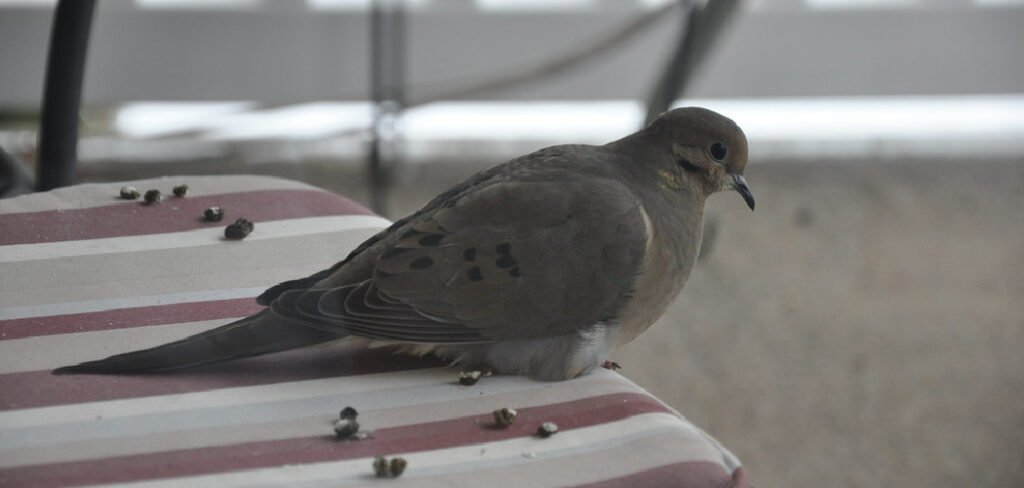
Dealing with these unwelcome droppings isn’t just about aesthetics; it is also a matter of hygiene and protecting the longevity of your fabrics and materials. Fortunately, you don’t have to surrender your yard to the flock.
With a few strategic changes and harmless deterrents, you can reclaim your space. In this guide, we will explore exactly how to prevent bird poop on patio furniture using humane and effective methods that anyone can implement this weekend.
Why Knowing How to Prevent Bird Poop on Patio Furniture Matters
Understanding the best strategies for keeping your outdoor living area sanitary is crucial for any homeowner. Birds are naturally drawn to sturdy, elevated surfaces that offer a good vantage point of the surrounding area. Unfortunately, your deck chairs, tables, and umbrellas fit this description perfectly.
When birds claim your furniture as their territory, the resulting mess is highly acidic. Over time, these droppings can eat away at expensive stains on wood, corrode metal finishes, and permanently stain delicate fabric cushions.
Beyond the physical damage, there are significant health considerations. Bird waste can carry bacteria and parasites that you definitely do not want near your family or food. By taking proactive steps now, you save yourself hours of scrubbing later and extend the lifespan of your outdoor investment.
Learning these prevention techniques allows you to coexist with local wildlife without letting them ruin your relaxation time. It creates a cleaner, safer environment for everyone to enjoy the fresh air.
7 Step Methods Guide on How to Prevent Bird Poop on Patio Furniture
Step 1: Install Reflective Scare Devices
Visual deterrents are one of the most effective and simplest ways to discourage birds from landing near your seating area. Birds have excellent eyesight and are easily startled by sudden flashes of light or moving objects that they cannot identify.
You can purchase specialized reflective tape, spinning rods, or hanging discs designed specifically for this purpose. Even old CDs or strips of aluminum foil can work in a pinch if you hang them where they will catch the breeze and sunlight.

Place these reflective items high up near your patio cover, umbrella, or nearby trees. The unpredictable movement and light reflection create a zone that feels unsafe for birds, encouraging them to find a calmer spot to perch.
This method is completely humane and requires no maintenance other than checking to ensure the items are still hanging securely after a storm. It is a fantastic first line of defense for any gardener.
Step 2: Utilize Ultrasonic Repellent Gadgets
Technology offers modern solutions for age-old garden problems, and ultrasonic repellents are a great example. These small devices emit a high-frequency sound that is irritating to birds but typically inaudible to humans and most pets.
When a bird flies within the sensor’s range, the device triggers the noise, effectively training them to avoid that specific area. Many models are solar-powered and weatherproof, making them perfect for outdoor use without adding to your electric bill.
You should position these gadgets facing the main approach path birds take to your patio. Because the sound does not penetrate solid objects well, ensure there is a clear line of sight between the device and your furniture.
Over a week or two, the local bird population will learn that your patio is a noisy, uncomfortable place to be. This is a set-it-and-forget-it solution that works around the clock to keep your cushions clean.
Step 3: Remove Food and Water Sources
One of the primary reasons birds congregate in specific backyards is the availability of resources. If you are accidentally running a buffet, birds will naturally loiter nearby, increasing the chances of droppings on your furniture.
Start by looking for anything edible in your immediate patio area. This includes crumbs left over from dinner, unsealed trash cans, or pet food bowls left outside. Even a small amount of food can attract a large flock.
Water is another major magnet. Birdbaths are lovely, but if they are placed right next to your seating area, you are inviting trouble. Relocate bird feeders and baths to the far end of the garden, well away from where you sit.
This simple landscaping adjustment creates a designated wildlife zone separate from your relaxation zone. By managing these attractants, you naturally shift the bird activity away from your deck without causing them any harm.
Step 4: Apply Non-Toxic Gel Repellents
Bird repellent gels are sticky, uncomfortable substances that birds detest landing on. When a bird attempts to land on a surface treated with this gel, the tactile sensation is unpleasant, prompting them to fly away immediately.
These gels are generally transparent and non-toxic, making them safe to use around your home. They are particularly useful for rigid surfaces like the tops of pergolas, railings, or the metal frames of your chairs where birds like to perch and scout.
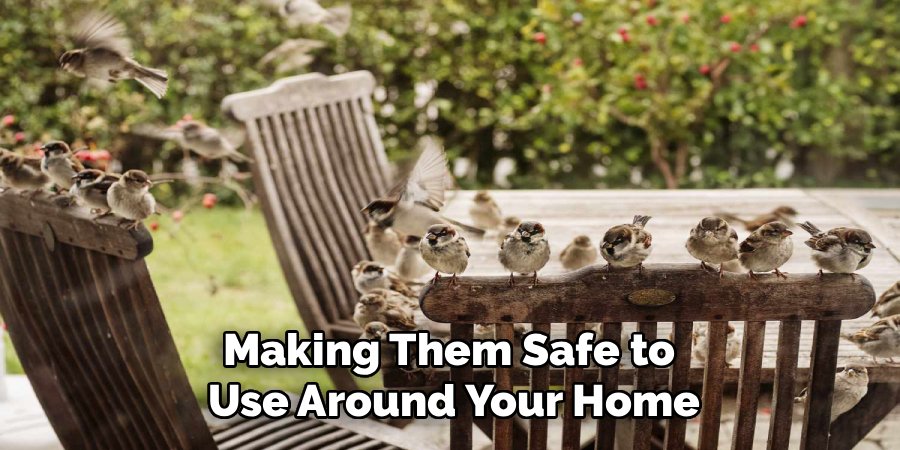
Apply the gel in a wavy line or small beads along the areas where you notice birds landing most frequently. Be careful not to put it where people will touch it, as it can be messy. The goal is to make the landing zone unappealing.
Over time, the birds will remember the sticky sensation and avoid those specific spots entirely. This creates a physical barrier that reinforces the message that your furniture is off-limits.
Step 5: Incorporate Decoy Predators
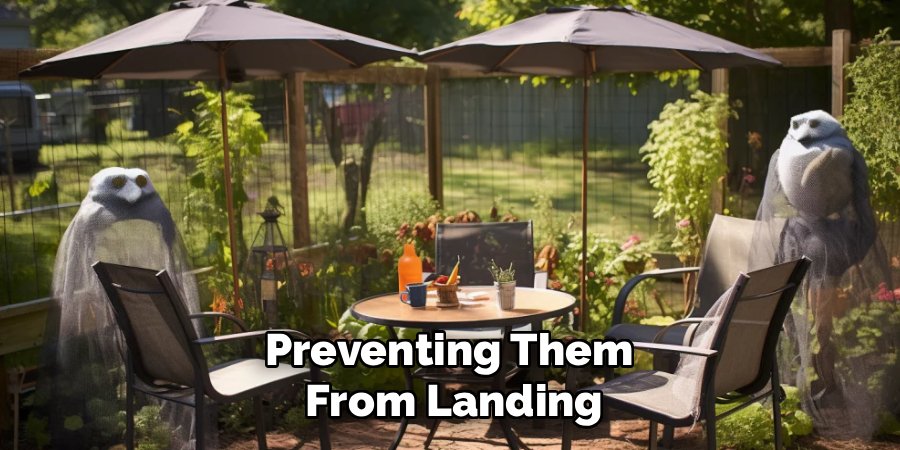
Using decoy predators is a classic gardening trick that taps into a bird’s natural survival instincts. Plastic owls, rubber snakes, or hawk kites can be surprisingly effective at scaring smaller birds away.
The key to success with decoys is realism and movement. If you place a plastic owl on your fence and leave it there for months, birds will eventually realize it is not a threat and may even perch on it.
To make this method work, you need to move the decoys frequently. Shift the position of your owl every few days or use a decoy with a moving head that rotates in the wind. Place rubber snakes on the floor one day and on a table the next.
This constant change keeps the birds on edge, making them believe a real predator is patrolling the area. It is a low-cost, chemical-free way to protect your space and adds a bit of character to the garden.
Step 6: Use Furniture Covers Consistently
While deterrents are excellent, physically shielding your assets is the only 100% guarantee against messes when you aren’t using them. High-quality furniture covers are an essential investment for maintaining your outdoor setup.
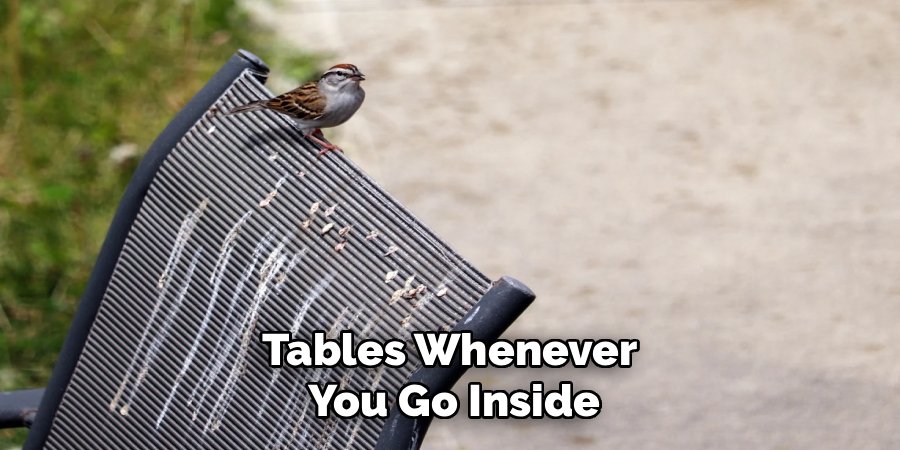
These covers are usually made from waterproof, durable materials like polyester or vinyl that can be easily wiped down or hosed off. By covering your chairs and tables whenever you go inside, you eliminate the target entirely.
Step 7: Install Bird Spikes on Nearby Perches
Bird spikes might sound aggressive, but they are actually a humane, non-lethal deterrent designed simply to prevent landing. These are strips of plastic or stainless steel prongs that make it impossible for a bird to find a flat foothold.
You wouldn’t put these on the seat of your chair, of course, but they are perfect for the rafters, fences, or roof edges directly above your patio furniture. Often, the mess on your furniture comes from birds perched high above it.
Keep Up with Garden Maintenance
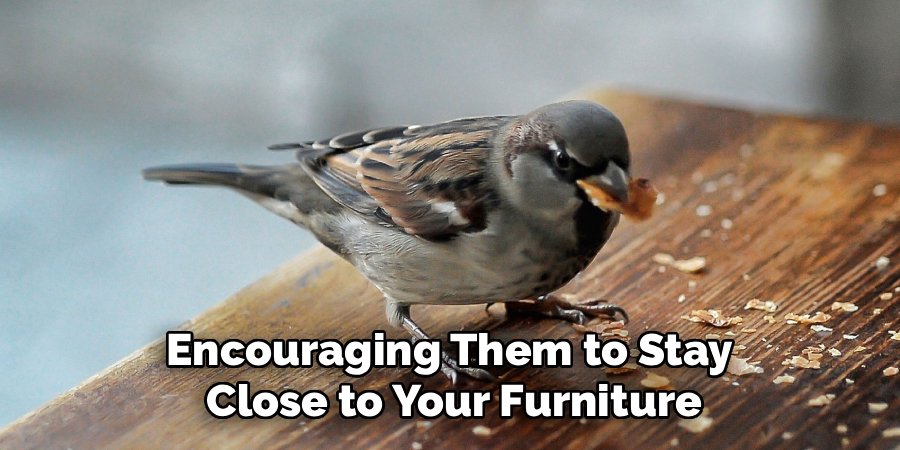
A well-groomed garden offers fewer hiding spots and nesting opportunities close to your house. Overgrown bushes and dense tree branches hanging over your patio act as perfect shelter for birds, encouraging them to stay close to your furniture. Regular pruning is essential to reducing the bird population in your immediate living area. Trim back any branches that overhang your deck or patio to eliminate direct drop zones.
Frequently Asked Questions
Can I Use Essential Oils To Keep Birds Away?
Yes, certain essential oils can act as natural deterrents. Birds generally dislike strong scents such as peppermint, lemon, and chili. You can create a DIY spray by mixing water with a few drops of these oils and misting it around your patio area. However, the scent dissipates quickly outdoors, so you will need to reapply the mixture frequently, especially after rainfall, to maintain its effectiveness.
Are There Certain Colors That Scare Birds?
Many experts suggest that birds avoid bright, unnatural colors. One theory is that they associate certain colors with danger or toxicity. “Terror Eyes” balloons, which are often yellow with large eyes, are effective visual scares.
Some homeowners believe that the color blue is a deterrent, leading to the tradition of painting porch ceilings “haint blue,” though scientific evidence varies on whether specific colors alone will permanently keep them away.
Will Spinning Pinwheels Actually Work?
Spinning pinwheels can be quite effective, especially for smaller birds. They combine two major deterrents: movement and light reflection. The sudden motion caused by the wind can startle birds, preventing them from landing. For the best results, use pinwheels made of holographic or metallic material. Like other visual scares, it helps to move them around occasionally so the birds do not get used to their presence.
Is It Safe To Use Fishing Line As A Barrier?
Using monofilament fishing line is a common method known as “grid wiring.” You string the line a few inches above the surfaces where birds like to perch, such as railings. Because the line is thin and hard to see, birds feel unstable and unsafe when they try to land, causing them to leave. It is generally safe and humane, provided the line is taught enough that birds won’t get tangled in it.
How Often Should I Clean Bird Poop Off Furniture?
You should clean droppings as soon as you spot them. Bird waste is highly acidic and can quickly damage finishes, bleach fabrics, and corrode metal. Furthermore, dried droppings can turn into dust that carries bacteria, which you might inhale. For fresh messes, a hose and mild soap usually work. For dried stains, you may need a specialized enzyme cleaner and a soft scrub brush to lift the residue safely.
Conclusion
Creating a pristine outdoor sanctuary requires a mix of patience and strategy. You do not have to put up with the daily chore of scrubbing your chairs or the embarrassment of seating guests on stained cushions. By combining visual deterrents, physical barriers, and smart landscaping, you can effectively redirect your feathered friends to other parts of the garden.
Remember, the goal is not to banish nature entirely, but to manage where it interacts with your living space. Start with the simpler methods, like removing food sources and using covers, and add stronger deterrents if the problem persists. With these tips, you now know exactly how to prevent bird poop on patio furniture so you can get back to enjoying your beautiful backyard in peace.

About
Jovie Mathews is a backyard and outdoor expert writer with over 12 years of hands-on experience transforming neglected outdoor spaces into thriving gardens and functional retreats. Raised in a family where weekends meant digging in the soil and building raised beds from scratch, Jovie developed a genuine love for the outdoors long before it became a career.
She writes with a practical, no-fluff approach — always testing ideas in her own backyard before sharing them with readers. From composting systems and native plant selection to patio design and pest control, Jovie covers the full spectrum of backyard life with equal parts expertise and enthusiasm.
Education
B.Sc. in Horticulture Science
University of Florida (UF) · Gainesville, FL · 2014
IFAS College of Agricultural and Life Sciences
Minor in Environmental Studies
University of Florida (UF) · Gainesville, FL · 2014
College of Liberal Arts and Sciences
Areas of expertise
- Lawn & Garden Care
- Soil prep, planting, seasonal care
- Outdoor DIY Projects
- Raised beds, fencing, pathways
- Composting & Soil Health
- Organic methods, amendments
- Native Plants & Wildlife
- Pollinators, habitat gardening
When she is not writing, Jovie can be found testing new composting techniques, growing tomatoes in questionable quantities, or convincing her neighbors that clover lawns are actually a great idea. She currently gardens in the Pacific Northwest.