
A birdbath can transform your garden into a lively sanctuary, attracting a beautiful array of feathered visitors. However, a dirty birdbath can be more than just an eyesore; it can become a breeding ground for harmful bacteria, algae, and mosquitoes that pose a threat to the birds you want to attract. Ensuring the water is fresh and the basin is clean is essential for their health and safety.

Many new garden enthusiasts wonder about the best method for maintaining their water feature. This guide will provide a simple, effective routine for how to keep birdbath clean, ensuring it remains a safe and inviting spot for birds to drink and bathe all year round. By following a few easy steps, you can provide a healthy environment for your garden visitors and enjoy the vibrant activity they bring.
Why a Clean Birdbath Matters
Keeping your birdbath clean is about more than just appearances; it is a critical part of responsible wildlife stewardship in your own backyard. Stagnant, dirty water is a major health hazard for birds. It can harbor bacteria, fungi, and viruses that cause diseases like avian conjunctivitis, salmonellosis, and avian pox. Birds can become ill by drinking contaminated water or by bathing in it, which can spread pathogens to their feathers and then to their nests and young.
Furthermore, a neglected birdbath quickly becomes a breeding site for mosquitoes, which can carry diseases that affect both birds and humans, such as West Nile virus. A clean birdbath provides safe, fresh water, which is crucial for birds’ survival, especially during dry spells or freezing winter months. A well-maintained basin will attract more birds, offering you more opportunities to enjoy their presence while knowing you are supporting their well-being.
7 Step-by-Step Guide on How to Keep Birdbath Clean
Step 1: Gather Your Cleaning Supplies
Before you begin, gather all the necessary supplies to make the process efficient. You will need a stiff scrub brush dedicated solely to cleaning your birdbath to avoid cross-contamination with household chemicals. A bucket for fetching fresh water and another for disposing of the old, dirty water is also helpful.
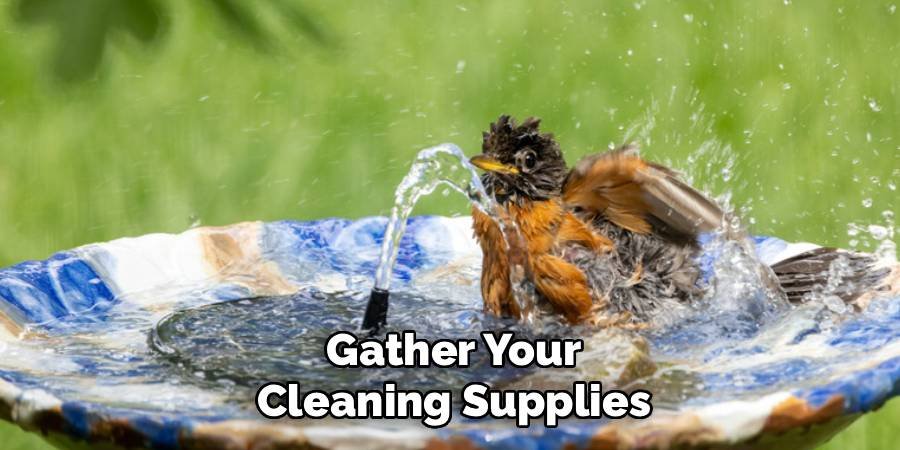
You’ll want protective gloves to keep your hands clean and safe. For the cleaning solution itself, a simple mixture of nine parts water to one part distilled white vinegar is highly effective and safe for birds. Avoid using harsh chemical cleaners like bleach, as even small residues can be toxic to wildlife. Having everything ready will streamline the cleaning and get your birdbath back in service quickly.
Step 2: Drain the Old Water
The first practical step is to empty all the old, stagnant water from the birdbath basin. Be thoughtful about where you dispose of this water. Pouring it directly onto your lawn or into a garden bed is generally fine, but avoid dumping it near other water sources or in areas where it might collect and attract more pests. If the water is particularly green and full of algae, it’s better to dispose of it down a drain. This step is crucial because it removes the primary environment where algae, mosquito larvae, and harmful bacteria thrive. Starting with a completely empty basin ensures that your cleaning efforts are as effective as possible and don’t just mix with the existing contaminated water.
Step 3: Remove Debris and Sludge
With the water gone, you will likely see a layer of sludge, leaves, bird droppings, and other debris at the bottom of the basin. Use your gloved hands or a small garden trowel to scoop out as much of this solid material as possible. This gunk is a food source for bacteria and algae, so removing it physically is a key part of the cleaning process.
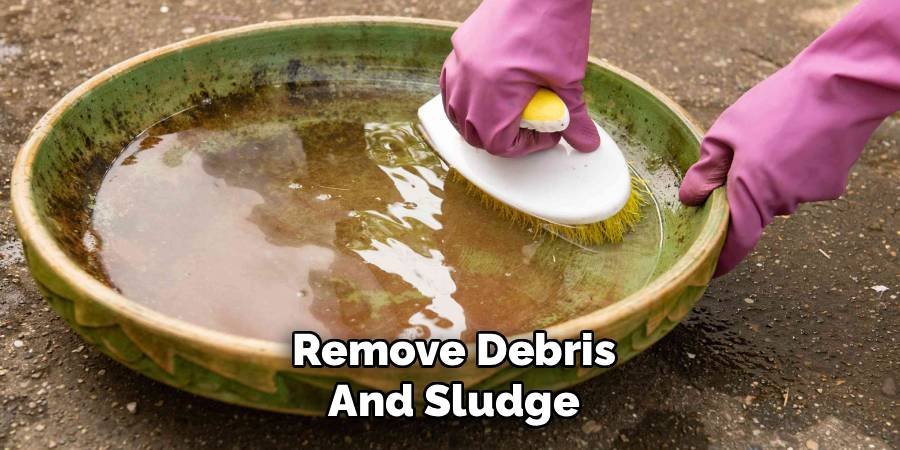
Pay close attention to the crevices and textured surfaces of your birdbath, as debris tends to accumulate in these spots. A thorough removal of this physical waste makes the subsequent scrubbing step much more effective, allowing your brush to work directly on the surface of the basin rather than just pushing around loose grime.
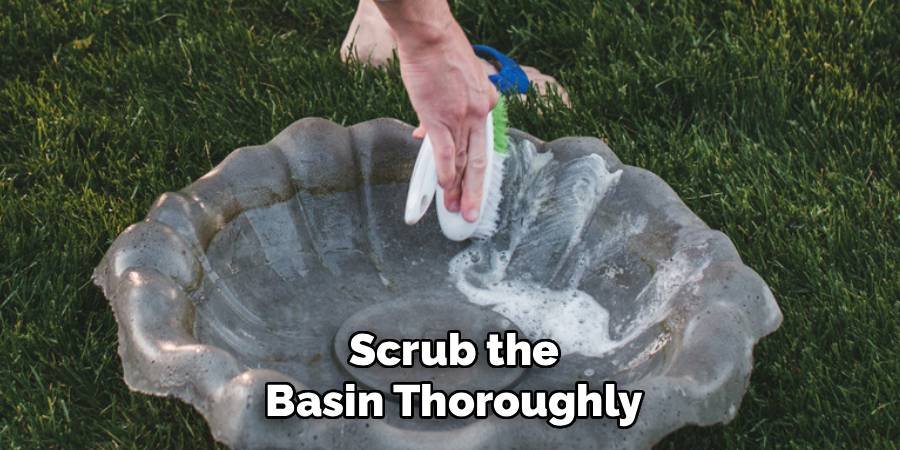
Step 4: Scrub the Basin Thoroughly
Now it’s time to scrub. Dip your stiff-bristled brush into your vinegar and water solution and begin scrubbing the entire inside surface of the birdbath. Apply firm pressure to dislodge any stubborn algae, dirt, and built-up grime. Work your way from the top edge down to the bottom, ensuring you clean every inch of the basin. This includes the rim, any decorative elements, and the base. The mild acidity of the vinegar helps to break down mineral deposits and kill algae and bacteria without posing a threat to the birds. This scrubbing action is vital for removing the invisible biofilm where pathogens live, ensuring the surface is truly clean and sanitized.
Step 5: How to Keep Birdbath Clean from Stubborn Algae
Sometimes, you’ll encounter stubborn green or black algae that doesn’t come off with a standard scrub. For these tough spots, you can create a more concentrated paste using baking soda and a small amount of water. Apply this paste directly to the algae stains and let it sit for about 15 minutes. The baking soda acts as a gentle abrasive that helps lift the algae without scratching the birdbath’s surface. After letting it sit, use your scrub brush to work on the area again. The combination of the abrasive paste and scrubbing action should remove even the most persistent algae, restoring the basin’s original appearance and ensuring a completely clean surface.
Step 6: Rinse the Birdbath Completely
This is one of the most critical steps in the entire process. Once you have finished scrubbing, you must rinse the birdbath basin thoroughly with fresh, clean water. Rinse it two or three times to ensure that all traces of the vinegar solution, baking soda paste, and any dislodged grime are completely washed away.
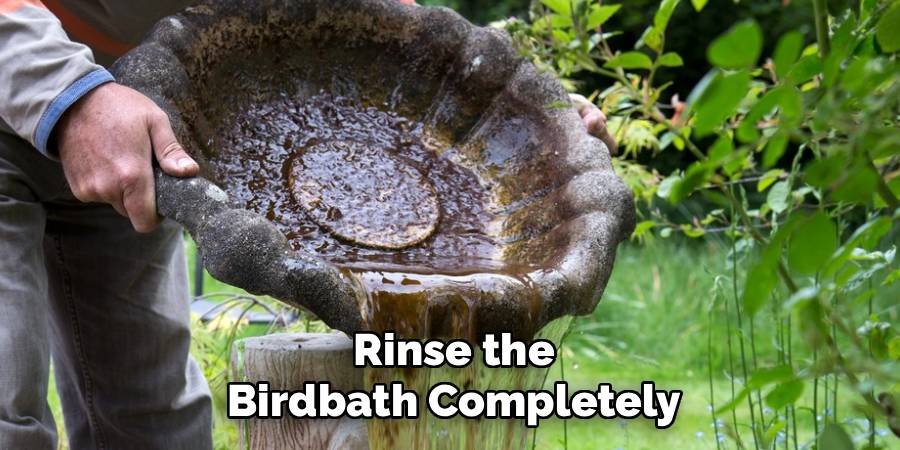
Any cleaning residue left behind could contaminate the fresh water and be harmful to birds. Use a hose with good pressure or several buckets of water to flush the basin until the water runs completely clear. A final wipe with a clean cloth can help remove any last traces of residue before refilling.
Step 7: Refill with Fresh, Clean Water
After you have thoroughly cleaned and rinsed the basin, it’s time to refill it. Use fresh, cool water from your tap or garden hose. Fill the basin so that the water is no more than one to two inches deep. This shallow depth is ideal for smaller songbirds, as they prefer to bathe and drink in water where they can stand comfortably without being fully submerged. Deeper water can be a drowning hazard for small birds and may deter them from using the birdbath. Providing a shallow pool of clean water makes your birdbath an accessible and safe resource for a wide variety of bird species visiting your garden.
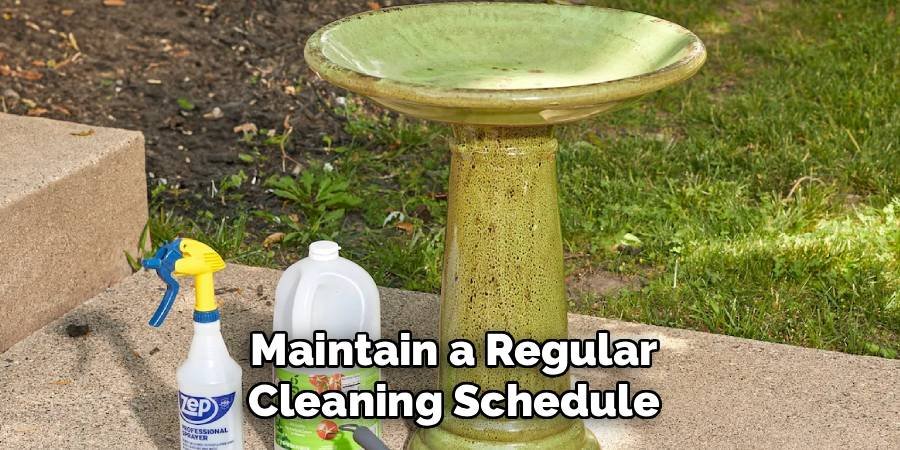
Maintain a Regular Cleaning Schedule
Consistency is the most important factor in keeping your birdbath clean and safe. A full cleaning, as detailed in these steps, should be performed at least twice a week during warmer months when algae growth is rapid and bird activity is high. In cooler weather, a weekly cleaning may be sufficient. Between deep cleans, you can simply dump the old water every day or two and rinse the basin with a hose before refilling. This daily refresh prevents water from stagnating and significantly reduces the buildup of debris. Establishing a regular schedule ensures your birdbath remains a healthy haven, not a hazard.
Frequently Asked Questions
How Often Should I Change the Water in My Birdbath?
You should aim to change the water in your birdbath every one to two days, especially during hot weather. Stagnant water quickly develops algae and can become a breeding ground for mosquitoes. Frequent water changes not only keep it fresh for the birds but also minimize the amount of scrubbing you’ll need to do during your weekly deep clean. Simply tipping out the old water and refilling with fresh water is often enough for daily maintenance.
Is It Safe to Use Bleach to Clean a Birdbath?
No, you should avoid using bleach or any other harsh chemical detergents to clean your birdbath. Even a small amount of bleach residue can be toxic to birds, harming their feathers, skin, and internal organs if ingested. Instead, opt for a natural and safe cleaning solution. A mixture of one part distilled white vinegar to nine parts water is effective for killing most algae and bacteria without posing a risk to wildlife.
How Can I Keep Algae from Growing in My Birdbath?
Preventing algae growth is key to easier maintenance. Here are a few tips:
- Place your birdbath in a spot that gets some shade during the hottest part of the day, as sunlight promotes algae growth.
- Change the water frequently, at least every other day.
- Consider adding a water wiggler or solar-powered fountain. The constant motion of the water surface inhibits algae growth and also prevents mosquitoes from laying eggs.
What Can I Do to Keep My Birdbath from Freezing in Winter?
Birds need access to water year-round, especially when natural sources are frozen. To keep your birdbath functional in winter, you can purchase a birdbath heater or de-icer. These devices are thermostatically controlled to keep the water just above freezing without making it warm. They are safe for all types of birdbaths, including plastic, metal, and concrete, and use a minimal amount of electricity. Never add salt or antifreeze to the water, as these are lethal to birds.
Why Aren’t Birds Using My Birdbath?
If birds aren’t visiting your birdbath, there could be several reasons. The water might be too deep; most songbirds prefer a depth of only one to two inches. Try placing a few flat stones in the basin to create shallow areas. Location is also important. Birds feel vulnerable when bathing, so place the birdbath near shrubs or trees to provide cover from predators, but not so close that cats can easily ambush them. Finally, a dirty birdbath will deter visitors, so ensure it is consistently clean and filled with fresh water.
Conclusion
Providing a clean, safe water source is one of the most beneficial things you can do for the wild birds in your area. A well-maintained birdbath not only supports their health and survival but also enhances the beauty and vitality of your garden. By following a simple and consistent cleaning routine, you can easily prevent the spread of disease and create an inviting oasis for feathered friends. The process is straightforward: drain, scrub, rinse, and refill regularly. Now that you know how to keep birdbath clean, you are fully equipped to maintain a healthy and popular spot for birds to drink, bathe, and socialize. Your efforts will be rewarded with delightful bird activity throughout the seasons.

About
Jovie Mathews is a backyard and outdoor expert writer with over 12 years of hands-on experience transforming neglected outdoor spaces into thriving gardens and functional retreats. Raised in a family where weekends meant digging in the soil and building raised beds from scratch, Jovie developed a genuine love for the outdoors long before it became a career.
She writes with a practical, no-fluff approach — always testing ideas in her own backyard before sharing them with readers. From composting systems and native plant selection to patio design and pest control, Jovie covers the full spectrum of backyard life with equal parts expertise and enthusiasm.
Education
B.Sc. in Horticulture Science
University of Florida (UF) · Gainesville, FL · 2014
IFAS College of Agricultural and Life Sciences
Minor in Environmental Studies
University of Florida (UF) · Gainesville, FL · 2014
College of Liberal Arts and Sciences
Areas of expertise
- Lawn & Garden Care
- Soil prep, planting, seasonal care
- Outdoor DIY Projects
- Raised beds, fencing, pathways
- Composting & Soil Health
- Organic methods, amendments
- Native Plants & Wildlife
- Pollinators, habitat gardening
When she is not writing, Jovie can be found testing new composting techniques, growing tomatoes in questionable quantities, or convincing her neighbors that clover lawns are actually a great idea. She currently gardens in the Pacific Northwest.