
Owning a swimming pool is a delightful luxury, but maintaining that crystal-clear water requires a bit of chemistry know-how. One of the most critical yet often misunderstood components of pool care is Cyanuric Acid (CYA), commonly known as pool stabilizer or conditioner. Think of it as sunscreen for your chlorine; without it, the sun’s ultraviolet rays can destroy your sanitizer in a matter of hours, leaving your water vulnerable to algae and bacteria.
Learning the proper method for adding this stabilizer ensures your chlorine remains effective and your water stays safe for swimming. While handling chemicals might seem intimidating at first, the process is straightforward once you understand the basics. In this guide, we will walk you through exactly how to add cya to pool water safely and effectively, ensuring your backyard oasis remains pristine all season long.
Why Proper Stabilization Matters for Your Pool
Understanding the role of Cyanuric Acid is essential for any pool owner who wants to save money and time. Unstabilized chlorine is incredibly volatile when exposed to direct sunlight. In fact, a bright sunny day can burn off up to 90% of unstabilized chlorine in just two hours. This rapid loss forces you to constantly add more sanitizer, which becomes expensive and labor-intensive.
By maintaining the correct CYA levels—typically between 30 and 50 parts per million (ppm)—you create a protective shield around your chlorine molecules. This bond prevents UV degradation while still allowing the chlorine to do its job of killing contaminants. However, balance is key. If levels get too high, the stabilizer can actually prevent chlorine from working effectively, a condition known as “chlorine lock.” Therefore, adding stabilizer correctly isn’t just about dumping chemicals; it is about precision and patience to maintain a healthy aquatic environment.
9 Step-by-Step Guide: How to Add CYA to Pool
Step 1: Test Your Current Water Chemistry
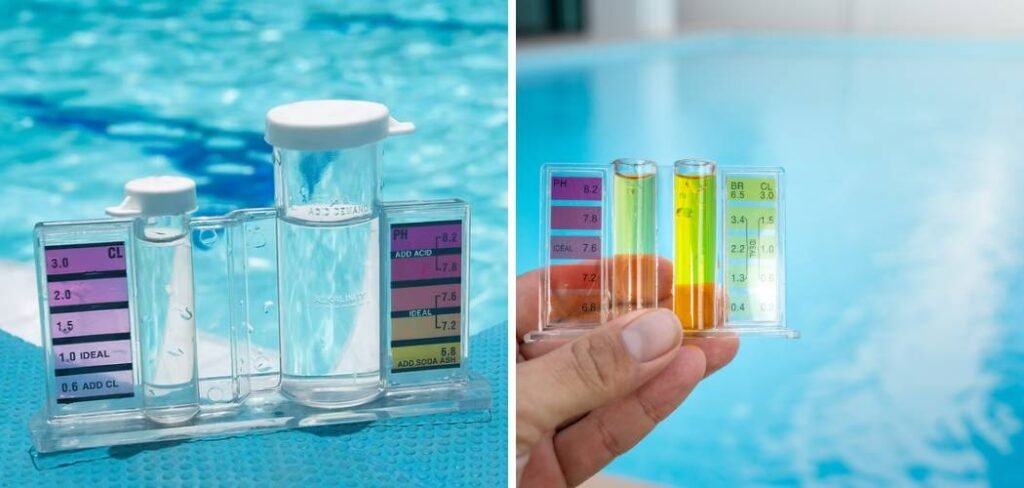
Before you introduce any new chemicals into your swimming environment, you must establish a baseline reading of your current water chemistry. You cannot manage what you do not measure, and adding stabilizer blindly can lead to serious water quality issues that are difficult to reverse.
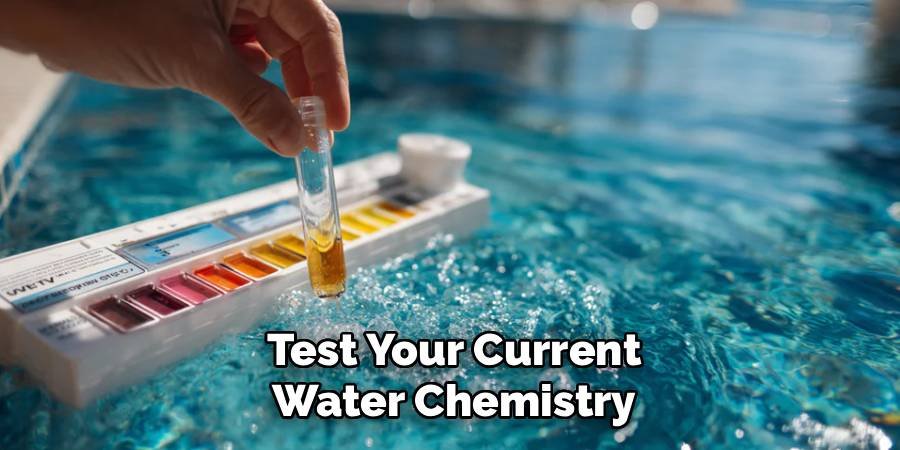
Use a high-quality liquid test kit or reliable test strips specifically designed to measure Cyanuric Acid levels. If your current reading is below 30 ppm, you need to add stabilizer. If it is already within the 30-50 ppm range, you do not need to add anything. Over-stabilizing is a common mistake that often requires partially draining the pool to fix, so accuracy at this stage is absolutely critical for long-term maintenance success.
Step 2: Calculate the Required Amount of Stabilizer
Once you have your current reading, you need to determine exactly how much product is required to reach the ideal level. Most stabilizer packaging includes a dosing chart on the back label that correlates with your pool’s total volume in gallons. For example, the chart might state that you need a specific number of pounds to raise the ppm by 10 in a 10,000-gallon pool.
Carefully read these manufacturer instructions because concentrations can vary between brands. It is always safer to slightly under-shoot your target than to overshoot it, as adding more later is significantly easier than removing excess chemical. Take a moment to do the math carefully to ensure you are preparing the correct dosage for your specific pool size.
Step 3: Prepare Your Pool Equipment
Before handling the chemical, ensure your pool pump and filter system are running cleanly and efficiently. A dirty filter can impede water flow, which will slow down the dissolving process of the granules. Perform a backwash on your sand or DE filter, or clean your cartridge filter if necessary, to ensure maximum circulation.
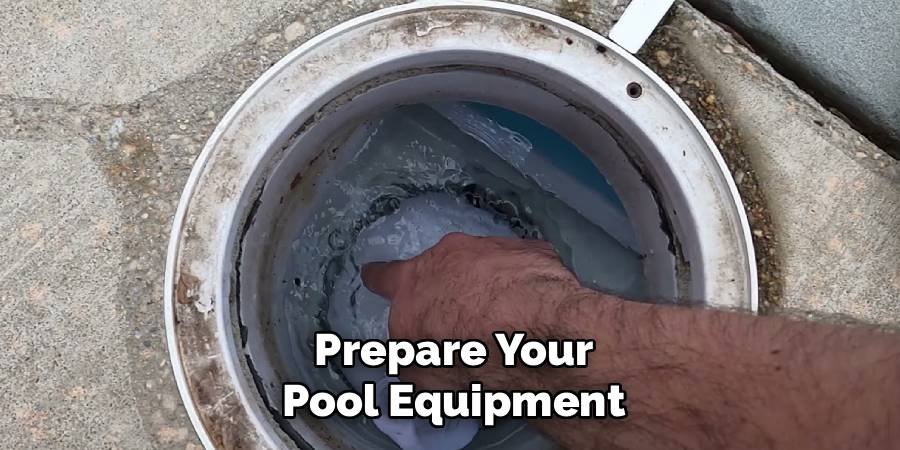
You will need to leave the pump running continuously for at least 24 to 48 hours after adding the stabilizer to ensure it circulates fully. Check your skimmer baskets to make sure they are free of leaves and debris, as this is likely where you will be introducing the chemical. Proper circulation is the secret to successfully learning how to add cya to pool systems without damaging your pool liner or equipment.
Step 4: Protect Yourself with Safety Gear
Pool stabilizer is a mild acid, and like all pool chemicals, it requires respect and proper safety precautions during handling. Before you open the container, put on protective gloves and safety goggles to shield your skin and eyes from potential irritation. Avoid breathing in any dust that might rise when you scoop the granules.
It is best to handle these chemicals outdoors in a well-ventilated area rather than inside a shed or garage. Even though CYA is generally less harsh than chlorine shock, basic safety protocols prevent accidental chemical burns or respiratory irritation. Never mix pool chemicals together in a dry state, and always use a clean, dedicated scoop for measuring out the granules.
Step 5: Dissolve Granules Using the Sock Method
The most effective and safest way to introduce stabilizer is the “sock method,” which prevents undissolved granules from sitting on your pool floor and bleaching the liner. Take an old gym sock or a dedicated skimmer sock and fill it with the measured amount of Cyanuric Acid. Tie the top of the sock securely to prevent granules from escaping.
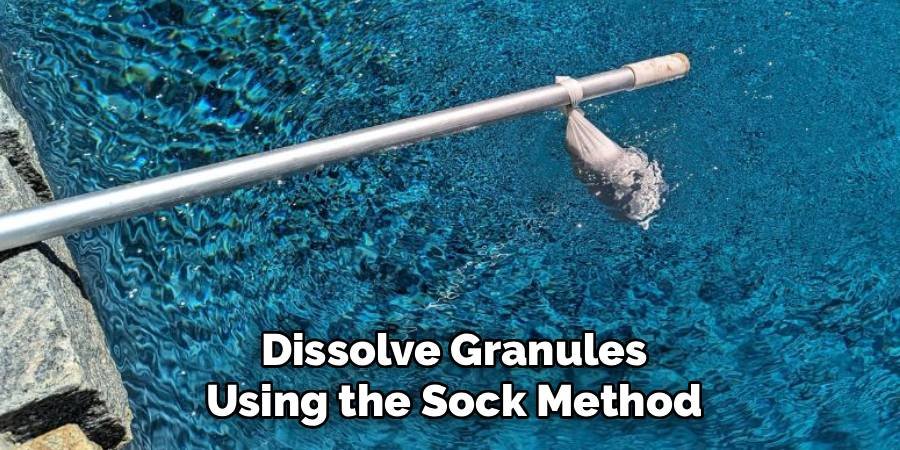
If you need to add a large amount, you may need to use multiple socks or repeat the process. Placing the granules directly into the skimmer without a sock can sometimes clog the pipes if they do not dissolve quickly enough, so this barrier method is highly recommended by experts for safe application.
Step 6: Place the Sock in the Skimmer Basket
Gently place the filled sock into the skimmer basket while the pump is running. Do not put it in the main pump basket, just the skimmer basket at the pool edge. The constant flow of water rushing over the sock will slowly dissolve the granules and distribute the chemical evenly throughout your pool system.
This method ensures that the highly concentrated acid does not sit in one spot, which could damage equipment or pool surfaces. You can also hang the sock in front of a return jet if you prefer, but the skimmer method is generally more convenient and keeps the sock out of the way of swimmers.
Step 7: Monitor and Squeeze the Sock
The dissolving process is not instant and can take several days depending on the water temperature and pump speed. To speed things up, you can periodically squeeze the sock gently with your hand or a pool pole. This action breaks up the clumps of wet granules and helps release the dissolved stabilizer into the water stream more rapidly.
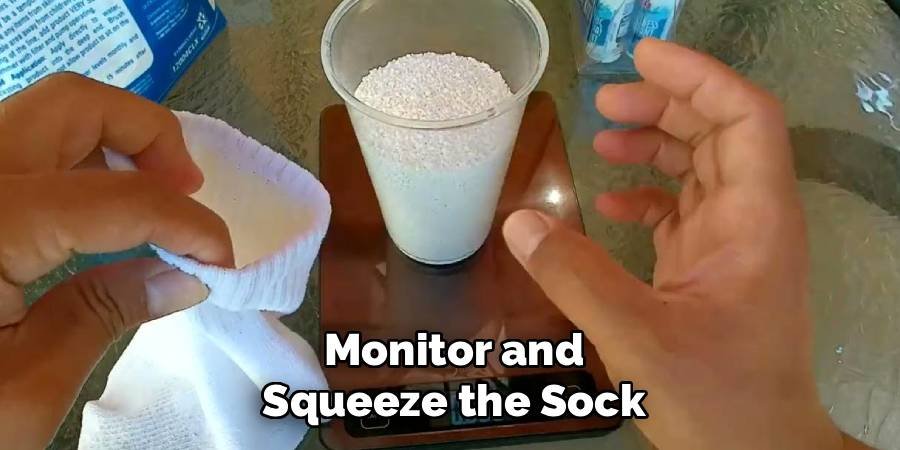
Check on the sock once or twice a day. You will notice the volume of granules decreasing steadily. Do not be alarmed if it takes 48 hours or more to fully dissolve; patience is vital here. Rushing this process by dumping powder directly into the water is how to add cya to pool incorrectly, often leading to gritty floors and potential staining.
Step 8: Keep the Pump Running Continuously
While the sock is in the skimmer and for some time after it empties, keep your pool pump running 24 hours a day. Continuous circulation ensures that the newly dissolved Cyanuric Acid mixes thoroughly with the entire body of water. If the pump turns off, the concentrated chemical solution sitting in the pipes could become corrosive.
Running the pump ensures the stabilizer reaches every corner of the pool, providing uniform protection for your chlorine. Do not backwash or clean your filter for at least a week after adding stabilizer, as the chemical can hang around in the filter media while dissolving, and backwashing would wash it right out to waste.
Step 9: Retest Water After One Week
Do not test your CYA levels immediately after the sock empties, as the readings will likely be inaccurate. It takes time for the stabilizer to fully integrate into the water chemistry. Wait at least 5 to 7 days after the granules have completely dissolved before testing the water again.
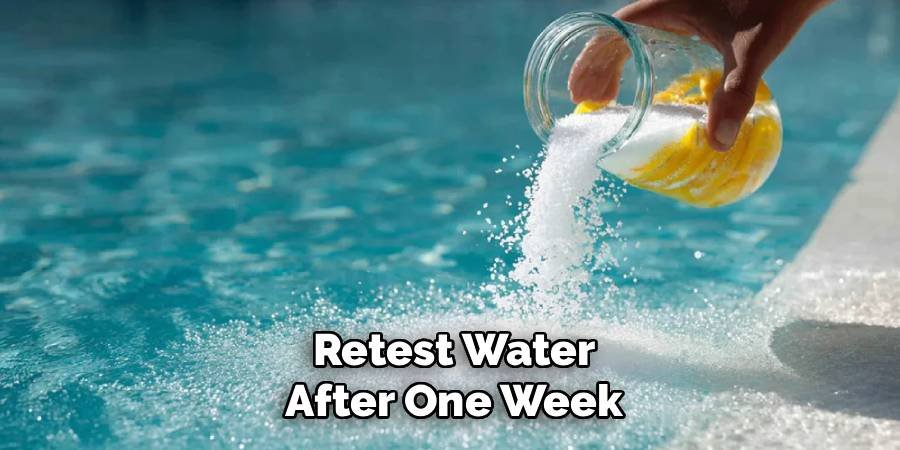
This waiting period ensures you get a true reading of your new stabilizer level. If the level is still below the target range of 30-50 ppm, you can repeat the process with a smaller dose. Remember, it is a slow-acting chemical, and patience prevents the headache of accidental overdosing.
Frequently Asked Questions (FAQ)
What Is The Ideal CYA Level For A Saltwater Pool?
Saltwater pools typically require slightly higher stabilizer levels than traditional chlorine pools. Most experts recommend maintaining Cyanuric Acid levels between 60 and 80 ppm for salt systems. This higher concentration helps protect the chlorine that your salt cell generates, allowing the generator to run at a lower percentage. This extends the lifespan of your expensive salt cell while ensuring the water remains sanitary during hot, sunny days.
Can I Add Stabilizer Directly To The Pool Water?
While you technically can broadcast granules directly into the deep end, it is generally discouraged. Granules take a long time to dissolve and can settle on the pool floor. This is particularly dangerous for vinyl liners, as the acidic granules can bleach or burn the material, leaving permanent white spots. Using the sock method or a skimmer application ensures the chemical dissolves fully within the circulation system before it ever touches your pool surfaces.
How Do I Lower CYA Levels If They Are Too High?
Unfortunately, there is no chemical additive that effectively reduces Cyanuric Acid levels. The only reliable way to lower the concentration is by dilution. You must drain a portion of your pool water—typically equivalent to the percentage you need to reduce—and refill it with fresh water. For example, if your level is double the target, you would need to replace about half the water. This is why adding stabilizer gradually is so important.
How Often Should I Add Stabilizer To My Pool?
Unlike chlorine, stabilizer does not evaporate or get used up quickly. It remains in the water until it is splashed out, backwashed, or diluted by heavy rain. Therefore, you typically only need to add it once at the start of the season or after significant fresh water has been added. You should test the level monthly during the swimming season, but you likely won’t need to add more very often compared to other chemicals.
Does Liquid Stabilizer Work Better Than Granules?
Liquid stabilizer, often called “instant conditioner,” works significantly faster than granules because it is already dissolved. You can pour it directly into the skimmer, and it mixes almost immediately. However, it is considerably more expensive than the granular form. If you need to fix a low CYA level quickly before a pool party, the liquid version is excellent. For routine maintenance and cost-effectiveness, granular stabilizer remains the popular choice for most homeowners.
Conclusion
Maintaining the correct balance of Cyanuric Acid is a fundamental skill for any pool owner looking to keep their water safe and sparkling. By following the proper steps, you protect your chlorine investment and ensure a sanitary swimming environment for your friends and family. The process requires patience—especially allowing the granules to dissolve fully—but the payoff is a pool that remains clear and algae-free even during the hottest summer days.
Remember to measure carefully, use the sock method for safety, and wait a full week before retesting. With these practices in place, you will no longer wonder how to add cya to pool water effectively. Instead, you will have the confidence of a seasoned pro, ready to enjoy a hassle-free swimming season in your perfectly balanced backyard retreat.

About
Jovie Mathews is a backyard and outdoor expert writer with over 12 years of hands-on experience transforming neglected outdoor spaces into thriving gardens and functional retreats. Raised in a family where weekends meant digging in the soil and building raised beds from scratch, Jovie developed a genuine love for the outdoors long before it became a career.
She writes with a practical, no-fluff approach — always testing ideas in her own backyard before sharing them with readers. From composting systems and native plant selection to patio design and pest control, Jovie covers the full spectrum of backyard life with equal parts expertise and enthusiasm.
Education
B.Sc. in Horticulture Science
University of Florida (UF) · Gainesville, FL · 2014
IFAS College of Agricultural and Life Sciences
Minor in Environmental Studies
University of Florida (UF) · Gainesville, FL · 2014
College of Liberal Arts and Sciences
Areas of expertise
- Lawn & Garden Care
- Soil prep, planting, seasonal care
- Outdoor DIY Projects
- Raised beds, fencing, pathways
- Composting & Soil Health
- Organic methods, amendments
- Native Plants & Wildlife
- Pollinators, habitat gardening
When she is not writing, Jovie can be found testing new composting techniques, growing tomatoes in questionable quantities, or convincing her neighbors that clover lawns are actually a great idea. She currently gardens in the Pacific Northwest.