
A self-propelled lawn mower is a back-saving marvel, gliding across your lawn with minimal effort. But when that drive system fails, it can feel like you’re suddenly pushing a stubborn tank through thick grass. The engine might roar to life, but the wheels refuse to turn, leaving you to do all the heavy lifting.

This common problem can be frustrating, but it doesn’t always mean a trip to the repair shop. Learning how to fix a self propelled lawn mower is a valuable skill that can save you time, money, and the hassle of being without your trusty machine. This guide will walk you through the most common issues and provide clear, beginner-friendly steps to diagnose and repair the self-propel function yourself.
A malfunctioning self-propelled lawn mower can turn a simple yard task into a real struggle. Whether it’s a sudden loss of power, jerky movement, or the drive wheels completely stopping, these issues can often be addressed with some basic troubleshooting. By understanding the mechanics behind your mower and identifying potential problem areas, you can often fix the issue yourself without expensive repairs. With the right tools and a bit of patience, you’ll have your mower back in working order in no time.
Why It Matters
Tackling a mower repair on your own might seem intimidating, but the benefits are significant. The most obvious advantage is cost savings. Professional repair shops charge for both labor and parts, and a seemingly simple fix can quickly become an expensive bill. By diagnosing and fixing the issue yourself, you only pay for the parts you need, which are often surprisingly affordable.
Beyond the financial savings, DIY repair empowers you. You gain a deeper understanding of how your equipment works, making you more confident in handling future maintenance tasks. There’s a great sense of satisfaction that comes from troubleshooting a problem and bringing your machine back to life. It also saves you the time and logistical hassle of transporting a heavy mower to and from a shop and waiting days or even weeks for its return.
Step-by-Step Guide on How to Fix a Self Propelled Lawn Mower
Follow these steps to diagnose and resolve the most common reasons why your mower’s self-propel feature might have stopped working.
Step 1: Perform a Basic Safety Check
Before starting any work, safety is your top priority. Disconnect the spark plug wire from the spark plug. This is a critical step that prevents the engine from accidentally starting while you are working on the mower, which could cause serious injury. If you have an electric mower, remove the battery.

Also, if you plan to tip the mower on its side to access the underside, make sure the air filter and carburetor are facing up to prevent oil and gas from leaking into them and causing engine problems later.
Step 2: Inspect the Drive Cable
The drive cable connects the self-propel lever or bail on the handle to the transmission. Over time, this cable can stretch, fray, or snap completely. First, visually inspect the entire length of the cable for any signs of damage. Check that it is securely connected at both the handle and the transmission.
If the cable appears loose or has too much slack, it may not be engaging the drive system properly. A stretched cable is a very common culprit and one of the easiest issues to fix.
Step 3: Adjust the Drive Cable Tension
If the drive cable looks intact but feels loose, you may just need to adjust its tension. Many mowers have an adjuster barrel located along the cable, often near the handle.

You can typically tighten the cable by turning this adjuster to remove the slack. The goal is to have just enough tension so that the drive engages fully when you squeeze the handle, but not so tight that it’s partially engaged when the handle is released. Refer to your owner’s manual for the specific adjustment procedure for your model.
Step 4: Examine the Drive Belt
The drive belt is what transfers power from the engine’s crankshaft to the transmission or gearbox, which in turn powers the wheels. To inspect it, you will likely need to remove the plastic cover that protects the blade and belt. Once exposed, look for cracks, fraying, or excessive wear on the belt. A stretched or broken belt cannot turn the transmission pulley, resulting in a loss of power to the wheels. Also, check to ensure the belt is properly seated on all the pulleys and hasn’t just slipped off.
Step 5: Mower by Replacing the Belt
If you find that the drive belt is broken, worn out, or stretched, it must be replaced. Purchase a new belt that is specifically designed for your mower’s make and model.

To replace it, you will typically need to release the tension on the pulleys, which may involve moving a spring-loaded idler pulley. Carefully remove the old belt and route the new one around the crankshaft pulley and the transmission pulley according to the diagram in your owner’s manual. Ensure the belt is properly seated before reattaching the protective cover.
Step 6: Check the Wheels and Gears
If the belt and cable are in good condition, the problem may lie with the wheels themselves. The front or rear wheels on a self-propelled mower often have plastic or metal gear teeth on the inside that mesh with the drive gears from the axle. Over time, these teeth can wear down or strip, causing the wheel to spin freely without engaging. Remove the drive wheels and inspect the teeth for wear. If they are stripped, you will need to replace the wheel.
Step 7: Inspect the Transmission or Gearbox
The transmission, also known as the gearbox, is the component that converts the rotational energy from the belt into power for the wheels. While transmission failure is less common, it can happen. With the drive belt cover off, engage the self-propel handle and watch the transmission pulley.
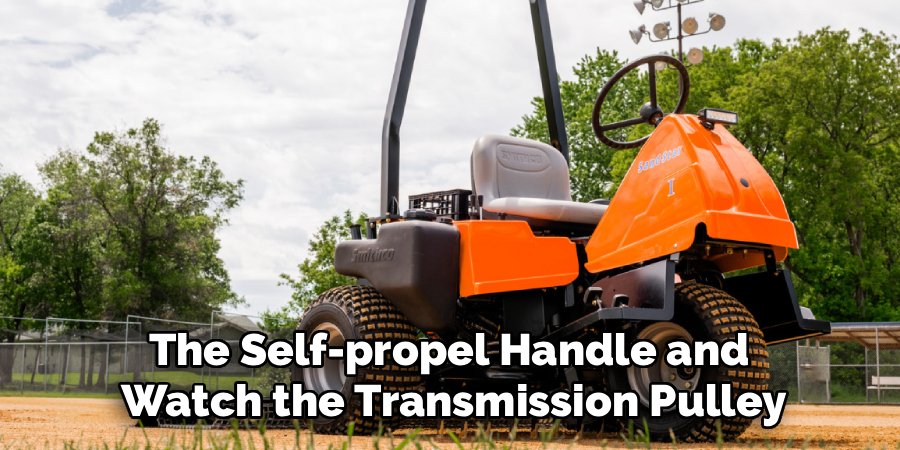
If the belt is turning the pulley but the wheels are not moving (and you’ve confirmed the wheel gears are good), the problem likely lies within the gearbox itself. Replacing a transmission can be a more complex job, but it is still manageable for a DIYer.
Frequently Asked Questions (FAQ)
Why Is My Self-Propelled Mower Moving So Slowly?
A mower that moves too slowly is often suffering from a stretched drive cable or a worn-out drive belt. These components lose their ability to effectively transfer power from the engine to the wheels. Start by adjusting the tension of the drive cable. If that doesn’t solve the problem, inspect the drive belt for signs of stretching or glazing and replace it if necessary.
Can I Use My Mower If the Self-Propel Is Broken?
Yes, you can still use your mower manually even if the self-propel system is not working. The engine and blade will function independently of the drive system. However, the mower will feel very heavy and will require significant physical effort to push, especially on hills or in thick grass. It is a temporary solution at best.
How Do I Know if My Drive Belt Needs Replacing?
A visual inspection is the best way to tell. Look for obvious signs of damage like cracks, fraying, or missing chunks. A belt that feels brittle or looks glazed and shiny is also due for replacement. Another sign of a worn belt is a squealing or chirping noise coming from the mower deck when the self-propel feature is engaged.
Is It Difficult to Replace a Drive Cable?
Replacing a drive cable is generally one of the easier repairs on a self-propelled mower. It typically involves unhooking the old cable from the control handle and the transmission assembly. You may need a few basic tools like pliers or a wrench. The most important part is routing the new cable correctly and ensuring it is not pinched or kinked.
What Is the Most Common Reason a Self-Propel System Fails?
The most common point of failure is the drive belt. It is a wear-and-tear item that is constantly under tension and exposed to debris. Over time, it will naturally stretch, crack, and eventually break. The second most common issue is a stretched or broken drive cable. Checking these two components first will solve the majority of self-propel problems.
Conclusion
A malfunctioning self-propel system can turn a simple chore into a grueling workout, but it doesn’t have to mean the end of your mower’s useful life. By methodically working through the common failure points—the drive cable, the belt, and the wheel gears—you can often pinpoint and resolve the issue with just a few basic tools and a little bit of time. The satisfaction of performing your own repair is a reward in itself.
Don’t be afraid to get your hands dirty and investigate the problem. With the knowledge from this guide, you now have a clear plan on how to fix a self propelled lawn mower. You can approach the task with confidence, save money, and get your mower back to gliding effortlessly across your lawn in no time.

About
Jovie Mathews is a backyard and outdoor expert writer with over 12 years of hands-on experience transforming neglected outdoor spaces into thriving gardens and functional retreats. Raised in a family where weekends meant digging in the soil and building raised beds from scratch, Jovie developed a genuine love for the outdoors long before it became a career.
She writes with a practical, no-fluff approach — always testing ideas in her own backyard before sharing them with readers. From composting systems and native plant selection to patio design and pest control, Jovie covers the full spectrum of backyard life with equal parts expertise and enthusiasm.
Education
B.Sc. in Horticulture Science
University of Florida (UF) · Gainesville, FL · 2014
IFAS College of Agricultural and Life Sciences
Minor in Environmental Studies
University of Florida (UF) · Gainesville, FL · 2014
College of Liberal Arts and Sciences
Areas of expertise
- Lawn & Garden Care
- Soil prep, planting, seasonal care
- Outdoor DIY Projects
- Raised beds, fencing, pathways
- Composting & Soil Health
- Organic methods, amendments
- Native Plants & Wildlife
- Pollinators, habitat gardening
When she is not writing, Jovie can be found testing new composting techniques, growing tomatoes in questionable quantities, or convincing her neighbors that clover lawns are actually a great idea. She currently gardens in the Pacific Northwest.