

As autumn arrives, the sight of oak trees shedding their acorns is a classic sign of the season. While charming at first, the novelty quickly wears off when your lawn becomes a minefield of hard, lumpy nuts. This carpet of acorns can make walking hazardous and yard work difficult.
This guide provides effective methods for how to pick up acorns from your yard, transforming a daunting chore into a manageable task. Whether you prefer manual tools or powerful machinery, clearing your lawn will protect its health and make your outdoor space more enjoyable for everyone.
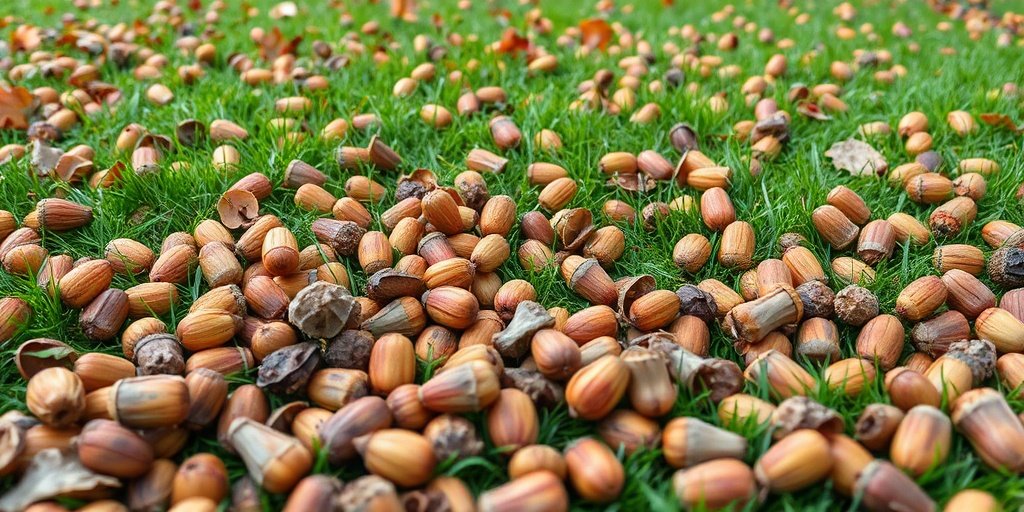
Acorns scattered across your yard not only create a messy appearance but can also hinder the growth of your grass and plants. They attract wildlife, which may not always be welcome, and can even become a slipping hazard during rainy conditions.
Tackling the acorn problem might seem overwhelming at first, but with the right approach and tools, it’s entirely manageable. Understanding your options will help you choose the most efficient method to clear away these pesky nuts and keep your lawn looking its best.
Tools and Materials
To effectively remove acorns from your yard, you’ll need a selection of tools and materials tailored to the task. Here are some commonly used items:
- Rakes: A sturdy rake, preferably with adjustable tines, is essential for gathering acorns into manageable piles.
- Leaf Blower: A powerful leaf blower can help move large quantities of acorns quickly, especially from hard-to-reach areas or large yards.
- Acorn Picker Uppers/Rollers: These specialized tools are designed to collect acorns efficiently by rolling over them and trapping them within.
- Tarp: A durable tarp can be used to collect and carry acorns away from the yard for disposal.
- Buckets or Bins: Use these to temporarily store acorns before discarding them or repurposing them, such as for compost.
- Protective Gear: Gloves, sturdy shoes, and other protective gear can help keep you safe and comfortable during the cleanup process.
Having the right tools and materials on hand will make the task more manageable and ensure that your yard remains neat and acorn-free.
7 Step-by-Step Guide on How to Pick Up Acorns from your Yard
Tackling an acorn-covered yard might seem overwhelming, but breaking it down into a clear process makes it much easier. This guide outlines various methods, from traditional raking to using specialized tools, allowing you to choose the best approach for your yard’s size and your personal preference.
Following these steps will help you efficiently clear your lawn and restore its clean, manicured look. This detailed approach to how to pick up acorns from yard ensures you work smarter, not harder, to achieve a pristine outdoor space.
Step 1: Assess the Situation and Choose Your Method
Before you begin, take a walk around your yard to gauge the extent of the acorn problem. Is it a light sprinkling or a dense blanket? The volume of acorns will help you decide on the most effective removal method. For a small area with few acorns, manual collection or a simple rake might suffice.
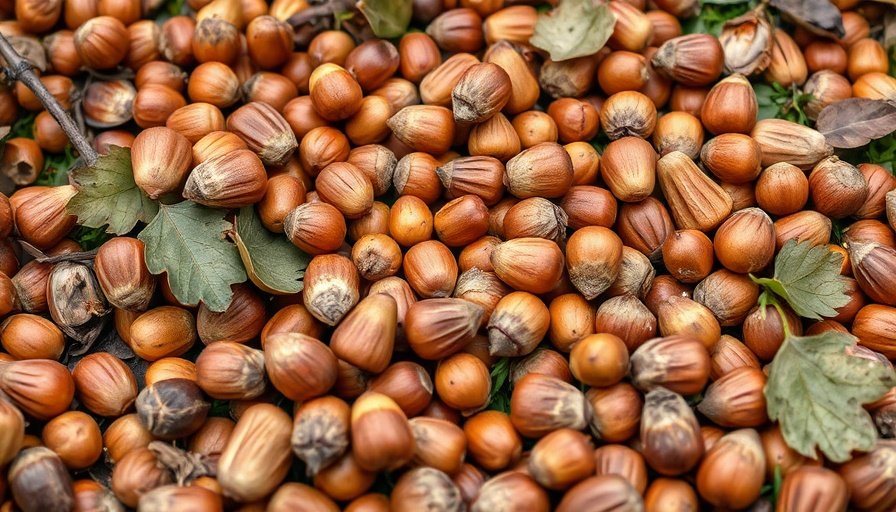
For larger yards or heavy accumulation, a specialized tool like a nut gatherer or a lawn vacuum will save you significant time and effort. Consider your physical ability and the time you have available. Choosing the right tool for the job from the start is the key to an efficient cleanup.
Step 2: Gather Your Tools and Safety Gear
Once you’ve decided on a method, gather your equipment. This could be a sturdy leaf rake, a specialized nut gatherer, a lawn sweeper, or a yard vacuum. You will also need collection containers, such as durable yard waste bags, a wheelbarrow, or large buckets.
Regardless of the method you choose, it’s wise to wear a pair of work gloves to protect your hands from blisters and scrapes. If you’re using a power tool like a yard vacuum, consider wearing safety glasses to protect your eyes from flying debris and ear protection to guard against the noise.
Step 3: The Manual Raking Method
Raking is the most traditional method for gathering acorns. For best results, use a sturdy metal or hard plastic leaf rake rather than a flimsy one designed only for leaves. Work in small, manageable sections, using short, firm strokes to pull the acorns into piles.
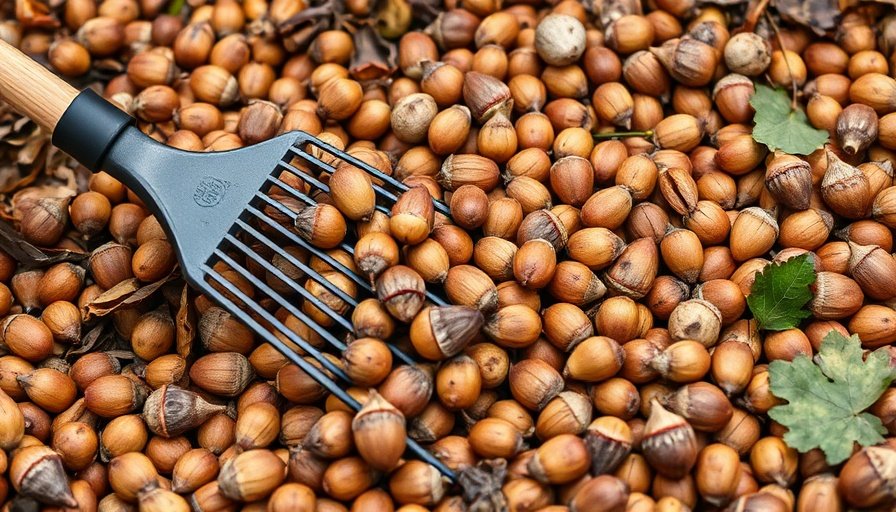
Raking on a calm day will prevent leaves and other debris from blowing back onto your cleared areas. Once you have created several piles, you can use a shovel or your hands to scoop them into your collection container. While labor-intensive, raking is an effective, low-cost solution for small to medium-sized yards.
Step 4: Using a Nut Gatherer Tool
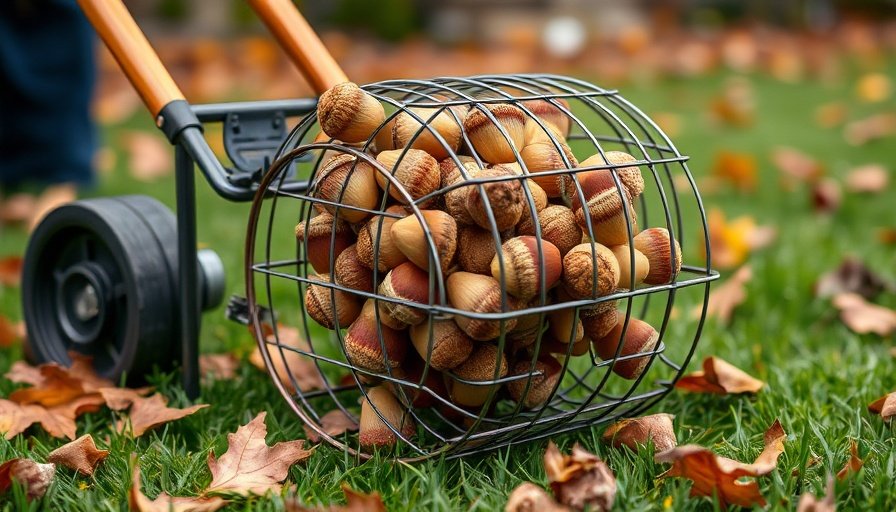
For a less back-breaking alternative to raking, consider a nut gatherer. This clever tool, often called a “nut wizard” or “acorn roller,” features a rolling cage made of flexible wires. As you push the tool across your lawn, the wires spread apart to collect the acorns inside the cage without picking up leaves or sticks.
When the basket is full, you simply spread the wires over a bucket to empty it. This method is incredibly efficient for collecting large quantities of acorns quickly and requires much less bending and stooping than manual methods, making it a popular choice for many homeowners.
Step 5: Employing a Lawn Sweeper
A lawn sweeper, also known as a lawn keeper, is another excellent option for larger yards. These push-style or tow-behind machines use a rotating brush to sweep acorns, leaves, and other debris into an attached hopper bag. As you walk or drive across the lawn, the sweeper does the hard work for you.
Push sweepers are great for medium-sized yards, while tow-behind models that attach to a riding mower can clear acres in a fraction of the time. They are particularly effective on flat, even terrain and offer a great way to collect debris without manual raking.
Step 6: Utilizing a Yard Vacuum
For the ultimate in clearing power, a yard vacuum is hard to beat. These machines work like an oversized vacuum cleaner, sucking up acorns, leaves, twigs, and other yard waste. Many models also have a mulching function that shreds the debris as it’s collected, reducing its volume significantly.
This makes disposal much easier and creates useful mulch for your garden beds. While yard vacuums are the most expensive option, their power and efficiency can be a worthwhile investment for those with very large properties or numerous mature oak trees.
Step 7: Dispose of the Acorns Properly
Once you have collected all the acorns, you need to decide what to do with them. Many municipal green waste programs accept yard debris, so you can bag them for curbside pickup. You can also add them to your compost pile, though they will take a long time to break down.

If you have a wooded area on your property, you can simply dump them there for wildlife to enjoy. Some people offer them for free to local crafters, schools, or farmers who might use them for projects or animal feed.
Common Mistakes to Avoid
A common mistake is waiting too long to start the cleanup. The longer acorns sit, the more they can damage the grass and become embedded in the soil, making them harder to remove. Another error is using the wrong tool for the job, such as a flimsy rake that breaks or trying to hand-pick a huge yard, leading to frustration and exhaustion.
Running a lawn mower over a heavy layer of acorns is also a bad idea. This can dull or damage the mower blade, send acorns flying like projectiles, and does little to actually remove them. Finally, many people forget to wear gloves, resulting in blisters and sore hands. Always choose the right equipment and start the process before the accumulation becomes unmanageable.
Frequently Asked Questions (FAQ)
What Is The Easiest Way To Pick Up Acorns?
The easiest way depends on your yard size. For small areas, a rolling nut gatherer is incredibly efficient and requires minimal physical effort. For larger properties, a push or tow-behind lawn sweeper can collect a massive amount of acorns quickly. A yard vacuum offers the most power but is also the most significant investment.
Will A Leaf Blower Work On Acorns?
A powerful leaf blower can be effective at moving acorns, especially on hard surfaces like driveways and patios. However, on grass, it can be difficult to blow them into a neat pile without also blowing away leaves and mulch. They are best used to gather acorns from tricky spots into an open area where they can be collected with another tool.
Can I Just Leave The Acorns On My Lawn?
It is not recommended to leave acorns on your lawn. They block sunlight and airflow, which can kill the grass underneath and create dead spots. They also present a tripping hazard, can damage lawn mower blades, and attract pests like squirrels and mice to your property. Regular removal is essential for maintaining a healthy and safe yard.
Do Acorns Hurt Your Lawn Mower?
Yes, mowing over acorns can damage your lawn mower. The hard shells can dull, chip, or even bend the mower blade. They can also be shot out from under the mower deck at high speeds, posing a safety risk to people, pets, and property. It’s always best to clear the majority of acorns before you mow.
What Can I Do With Collected Acorns?
Collected acorns can be disposed of in your green waste bin for municipal pickup. You can also add them to a compost pile, though they decompose slowly. Alternatively, you can offer them to local farmers for animal feed, schools for craft projects, or simply move them to a wooded area for wildlife to consume.
Conclusion
Clearing your yard of fallen acorns is an essential part of autumn lawn care that pays dividends in both aesthetics and lawn health. From manual raking and specialized nut gatherers to powerful lawn sweepers and vacuums, there is a method suited for every yard and budget.
By choosing the right tool and tackling the job before it becomes overwhelming, you can protect your grass, prevent pest issues, and maintain a safe, beautiful outdoor space. With this knowledge of how to pick up acorns from yard, you are well-equipped to handle the annual acorn drop with confidence.

About
Jovie Mathews is a backyard and outdoor expert writer with over 12 years of hands-on experience transforming neglected outdoor spaces into thriving gardens and functional retreats. Raised in a family where weekends meant digging in the soil and building raised beds from scratch, Jovie developed a genuine love for the outdoors long before it became a career.
She writes with a practical, no-fluff approach — always testing ideas in her own backyard before sharing them with readers. From composting systems and native plant selection to patio design and pest control, Jovie covers the full spectrum of backyard life with equal parts expertise and enthusiasm.
Education
B.Sc. in Horticulture Science
University of Florida (UF) · Gainesville, FL · 2014
IFAS College of Agricultural and Life Sciences
Minor in Environmental Studies
University of Florida (UF) · Gainesville, FL · 2014
College of Liberal Arts and Sciences
Areas of expertise
- Lawn & Garden Care
- Soil prep, planting, seasonal care
- Outdoor DIY Projects
- Raised beds, fencing, pathways
- Composting & Soil Health
- Organic methods, amendments
- Native Plants & Wildlife
- Pollinators, habitat gardening
When she is not writing, Jovie can be found testing new composting techniques, growing tomatoes in questionable quantities, or convincing her neighbors that clover lawns are actually a great idea. She currently gardens in the Pacific Northwest.