
We all enjoy watching birds in our gardens, but when they decide to move into your outbuildings, the charm quickly fades. Birds can transform from pleasant visitors into destructive pests the moment they start nesting in your rafters. They leave droppings on your equipment, steal expensive animal feed, and can even compromise the structural integrity of your building. If you have noticed nests appearing or hear constant fluttering overhead, it is time to take action before the population explodes.
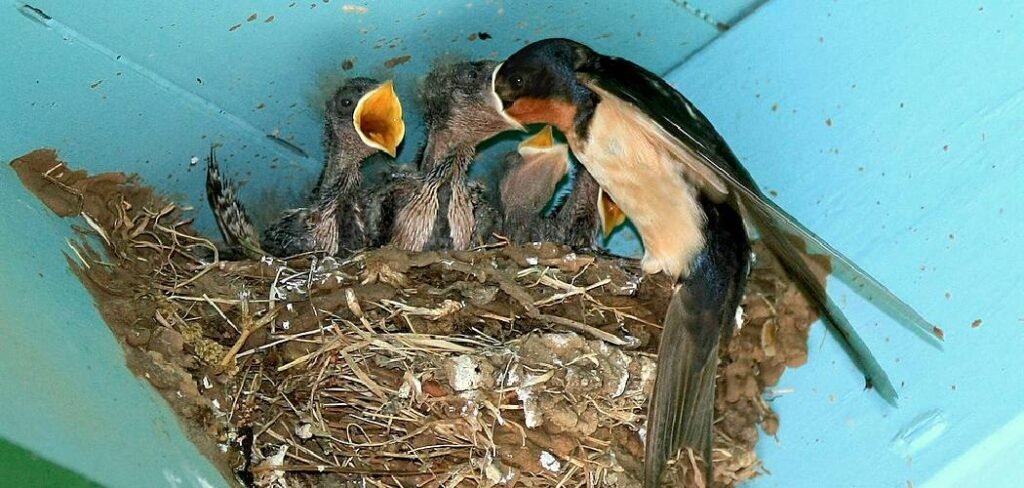
Learning how to keep birds out of a barn is an essential skill for any homesteader or gardener who values a clean and safe workspace. The process does not have to be cruel or overly complicated; it simply requires a strategic approach to make your space less inviting to feathered guests. By removing their access to food and shelter, you can encourage them to find a more natural habitat. In this guide, we will walk you through a comprehensive strategy to reclaim your space while keeping the local wildlife safe and sound.
Why You Must Protect Your Barn From Avian Invaders
You might wonder why a few sparrows or pigeons are such a big deal. The reality is that bird infestations pose serious health and safety risks that go beyond simple annoyance. Bird droppings, or guano, are highly acidic and can corrode building materials, damage farm machinery, and contaminate hay or grain supplies. More concerning is the health risk; birds can carry over 60 transmissible diseases, including Salmonella and E. coli, which can spread to humans, pets, and livestock.
7 Step-by-Step Guide on How to Keep Birds Out of a Barn
Step 1: Inspect the Structure for Entry Points
Before you can stop birds from entering, you need to understand exactly how they are getting in. Start by conducting a thorough audit of your barn’s exterior and interior, looking for holes, cracks, or gaps larger than a quarter. Birds are incredibly resourceful and can squeeze through surprisingly small openings to find warmth. Pay special attention to the eaves, ventilation gaps, and areas where the roof meets the walls.
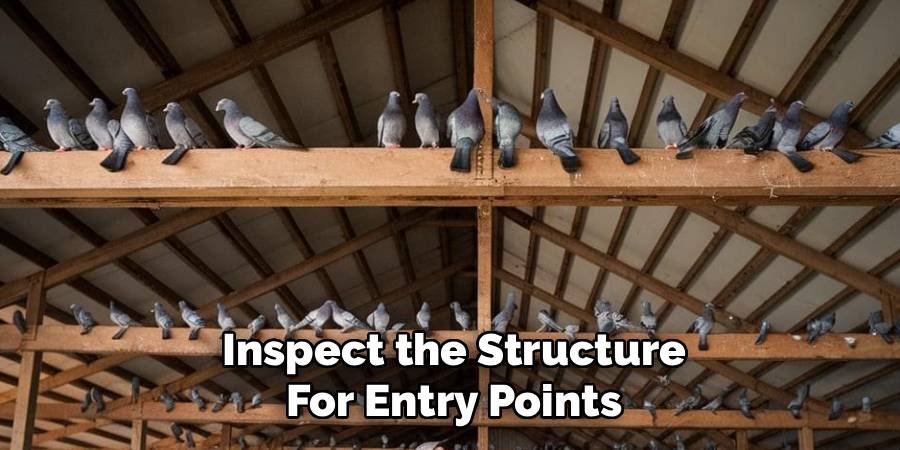
Identifying these perimeter weaknesses is the foundation of your defense strategy. Once you have mapped out every potential entrance, you will be ready to seal them off effectively, ensuring that your subsequent efforts are not wasted on a leaky building.
Step 2: Seal Small Gaps with Foam and Wire
Once you have identified the cracks and crevices, it is time to physically block them. For smaller holes, expanding foam is a quick and effective solution that fills the void completely. However, determined birds can sometimes peck through simple foam, so it is best to reinforce these areas. Stuffing copper mesh or steel wool into the holes before applying sealant creates a barrier that is painful to peck at and impossible to move. This combination is particularly effective for sparrows and starlings that prefer tight nesting spots. Taking the time to perform this detail work is often the difference between a bird-free zone and a recurring infestation, as it forces birds to look elsewhere for easy shelter.
Step 3: Install Heavy-Duty Bird Netting
For larger open areas like rafters or eaves that cannot be sealed completely, exclusion netting is your best friend. High-quality, UV-resistant bird netting acts as an invisible ceiling that prevents birds from landing on beams or building nests in the trusses. You must install the netting tightly, securing it to the perimeter of the ceiling so there are no sagging areas where birds could get trapped or squeeze through.
This physical barrier denies them access to their favorite high-up perches without interfering with the ventilation or layout of your barn. If you are wondering how to keep birds out of a barn permanently, installing a robust netting system is widely considered the gold standard for long-term prevention.
Step 4: Hang PVC Strip Curtains on Doors
Barn doors often need to stay open during the day for access and airflow, which invites birds right inside. To combat this, install heavy-duty PVC strip curtains over the main doorways. These plastic strips hang down and overlap, creating a solid visual barrier that birds are afraid to fly through. However, humans and machinery can push through them easily.
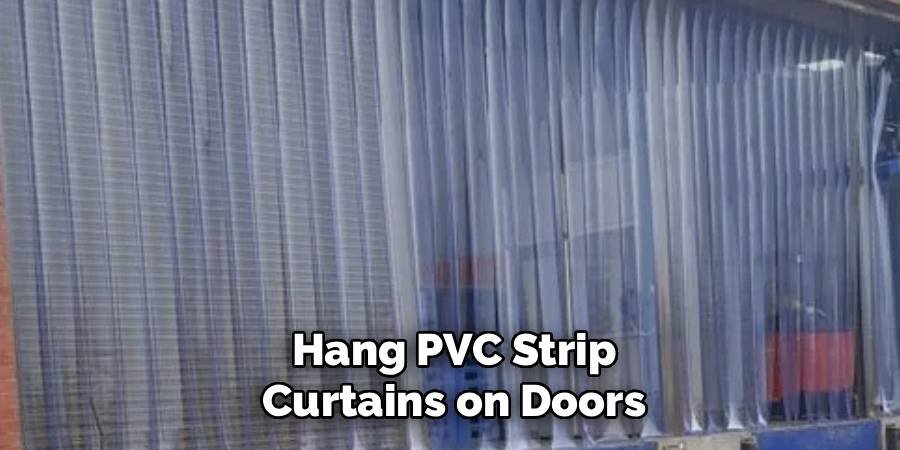
This allows you to maintain functionality while keeping the interior protected. The strips also help regulate temperature and keep out dust and other flying insects. Over time, birds learn that the “open” door is actually a solid wall, and they will stop attempting to fly through the entrance, significantly reducing the traffic into your workspace.
Step 5: Remove or Cover All Food Sources
Birds will endure difficult conditions if there is a promise of an easy meal waiting for them inside. To discourage them, you must be ruthless about removing food attractants. Store all animal feed, seeds, and grains in metal trash cans with tight-fitting lids that cannot be pried open. If you feed livestock in the barn, clean up any spilled grain immediately rather than leaving it on the floor. If you have bird feeders outside for wild birds, move them far away from the barn entrance. By eliminating the buffet, you make your barn a boring, resource-poor environment. Without the reward of food, birds have little incentive to fight past your other defenses.
Step 6: Deploy Visual Deterrents and Decoys
Visual scares can be a helpful supplemental tool to make your barn feel unsafe for avian pests. Utilizing items like predator decoys—plastic owls, hawks, or snakes—can trigger a bird’s flight response. For these to remain effective, you must move them around every few days; otherwise, birds will realize they are inanimate objects and ignore them.
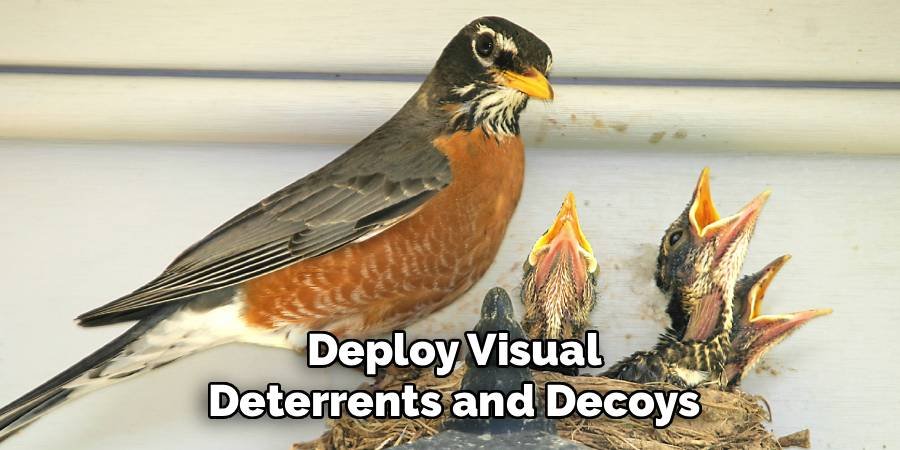
Shiny, reflective objects like old CDs, aluminum foil strips, or specialized scare tape can also disorient birds with flashing light. While these methods rarely work perfectly on their own, they add a layer of psychological pressure. When combined with physical barriers, visual deterrents help reinforce the message that your barn is a hostile territory for nesting.
Step 7: Utilize Auditory Repellents
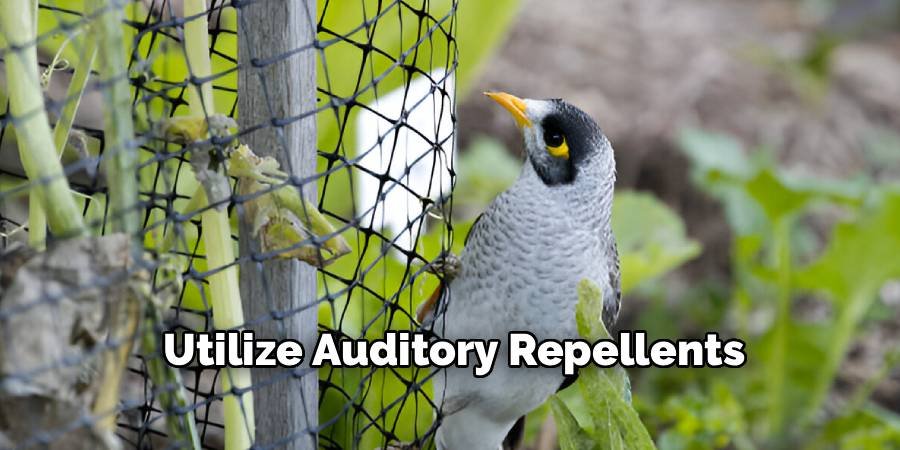
If visual scares aren’t doing the trick, you might need to annoy the birds with sound. Ultrasonic devices emit high-frequency sounds that are silent to humans but extremely irritating to birds, forcing them to seek a quieter location. Alternatively, you can use sonic devices that play recorded distress calls of specific bird species or the sounds of predators like hawks.
These sounds signal danger to the flock and can prevent them from settling down. It is important to verify that these sounds won’t distress your own livestock or pets before installing them. Auditory devices work best when you are figuring out how to keep birds out of a barn that has high ceilings where physical access for netting might be difficult or too expensive.
Frequently Asked Questions (FAQ)
Is It Legal To Remove Bird Nests?
It depends heavily on the species and your location. In the United States, the Migratory Bird Treaty Act protects most native bird species, making it illegal to move or destroy active nests that contain eggs or chicks. You are generally allowed to remove nests that are under construction and empty. However, invasive species like House Sparrows, European Starlings, and Rock Pigeons usually do not have this protection. Always identify the bird species positively and check local wildlife laws before disturbing any nesting site.
Do Ultrasonic Bird Repellers Actually Work?
Ultrasonic devices can be effective, but they are rarely a standalone solution. They work best in enclosed or semi-enclosed spaces like barns where the sound waves can bounce off walls, creating an uncomfortable environment for birds. However, birds can habituate to the noise over time if the frequency isn’t varied. For the best results, look for devices that alter their pitch and pattern randomly. These devices are most effective when used in combination with physical barriers like netting and spike strips.
Can I Use Cats To Keep Birds Away?
Barn cats are a traditional method for pest control and can be effective deterrents. Their presence alone triggers a fear response in birds, and they are excellent at hunting rodents that might also be attracting predators. However, cats cannot reach high rafters where most birds nest, so their impact is limited to the ground level. Additionally, relying on cats brings responsibilities regarding their care and safety. While they help reduce the population, they are unlikely to completely bird-proof a large structure on their own.
How Much Does It Cost To Bird-Proof A Barn?
The cost varies significantly based on the size of your barn and the methods you choose. Simple DIY solutions like visual deterrents, scare tape, and sealing small cracks with foam can cost under $50. However, installing professional-grade bird netting across a large ceiling is more labor-intensive and expensive, potentially costing several hundred dollars in materials. Investing in high-quality netting and PVC curtains upfront is usually more cost-effective than constantly cleaning up damage and wasted feed caused by a lingering infestation.
Will Shiny Objects Stop Birds Permanently?
Reflective objects like old CDs, aluminum pie pans, or flash tape are effective temporarily, but birds are intelligent and adaptable. They will eventually realize that the flashing lights pose no physical threat and will ignore them. These visual deterrents are best used as a short-term fix or as part of a multi-sensory approach involving noise and physical barriers. To prolong their effectiveness, you must move the objects regularly and change their position so the birds do not get used to the pattern.
Conclusion
Securing your outbuildings against avian pests is a worthwhile investment that protects your property and ensures a healthier environment for you and your animals. By combining physical barriers like netting and door curtains with smart sanitation practices, you can create a space that birds naturally want to avoid. Remember that consistency is the key to success; checking for new entry points and maintaining your deterrents will prevent future infestations from taking hold.
Now that you have the knowledge and tools, you can reclaim your workspace and say goodbye to the mess. Start by sealing those gaps and covering your feed today. Implementing these strategies on how to keep birds out of a barn will ensure your structure remains clean, safe, and peaceful for years to come.

About
Jovie Mathews is a backyard and outdoor expert writer with over 12 years of hands-on experience transforming neglected outdoor spaces into thriving gardens and functional retreats. Raised in a family where weekends meant digging in the soil and building raised beds from scratch, Jovie developed a genuine love for the outdoors long before it became a career.
She writes with a practical, no-fluff approach — always testing ideas in her own backyard before sharing them with readers. From composting systems and native plant selection to patio design and pest control, Jovie covers the full spectrum of backyard life with equal parts expertise and enthusiasm.
Education
B.Sc. in Horticulture Science
University of Florida (UF) · Gainesville, FL · 2014
IFAS College of Agricultural and Life Sciences
Minor in Environmental Studies
University of Florida (UF) · Gainesville, FL · 2014
College of Liberal Arts and Sciences
Areas of expertise
- Lawn & Garden Care
- Soil prep, planting, seasonal care
- Outdoor DIY Projects
- Raised beds, fencing, pathways
- Composting & Soil Health
- Organic methods, amendments
- Native Plants & Wildlife
- Pollinators, habitat gardening
When she is not writing, Jovie can be found testing new composting techniques, growing tomatoes in questionable quantities, or convincing her neighbors that clover lawns are actually a great idea. She currently gardens in the Pacific Northwest.