
Discovering rodents scurrying around your hens can be a nightmare for any backyard keeper. Not only do these pests steal expensive feed and contaminate water, but they also pose significant health risks to your flock and family. If you are noticing missing eggs or tunnel holes around your run, you are likely dealing with an infestation that requires immediate attention. Ignoring the problem will only allow the population to explode, leading to structural damage and stressed birds.
Fortunately, reclaiming your space is entirely possible with the right strategy. You do not need expensive exterminators to solve this issue if you act fast. By understanding their behavior and removing their access to food, you can create a rodent-proof environment. In this guide, we will walk you through exactly how to get rid of rats in chicken coop settings safely and effectively, ensuring your feathered friends remain happy and healthy.
Why You Must Stop Rodent Infestations Immediately
Dealing with rodents is not just about the nuisance of lost feed; it is a critical issue of biosecurity and animal welfare. Rats are known carriers of numerous diseases, including salmonella, leptospirosis, and mites, which can easily be transmitted to your chickens and subsequently to the eggs you collect for your family. A heavy infestation can introduce parasites that weaken your flock’s immune systems, leading to illness or even death among your birds.
Furthermore, rats are surprisingly aggressive predators. While they often start by stealing food, they will eventually target eggs and can even attack young chicks or small bantam breeds at night. The stress caused by their presence can cause hens to stop laying altogether. Structural damage is another major concern, as rats can chew through wood, plastic, and standard chicken wire with alarming ease. Addressing this problem immediately prevents costly repairs to your coop and protects the emotional and physical well-being of your flock.
8 Step Methods Guide on How to Get Rid of Rats in Chicken Coop
Step 1: Identify All Signs of Rodent Activity
Before you can effectively tackle the problem, you must understand the scale of the infestation. You should start by conducting a thorough daylight inspection of your entire coop and run area. Look closely for specific indicators such as small, dark droppings near food bowls or gnaw marks on wooden posts and door frames.
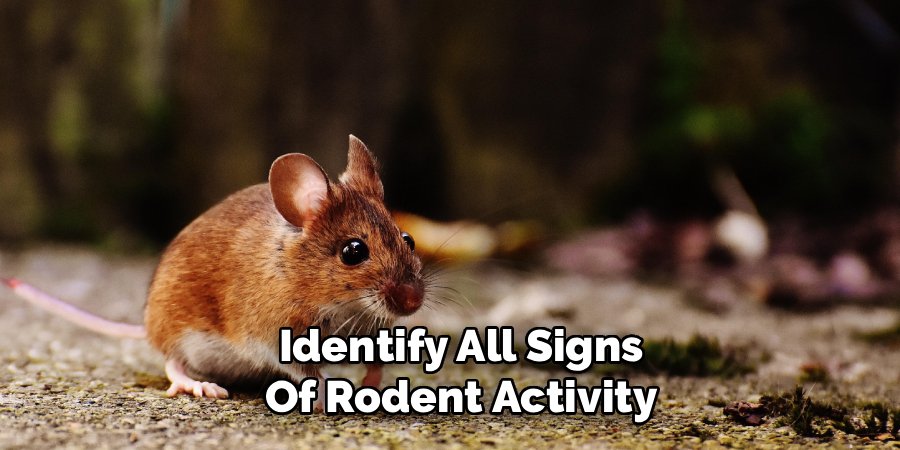
You might also notice greasy rub marks along the walls where rats travel frequently or discover burrow holes around the perimeter of the run. Understanding where they are entering and where they are nesting allows you to target your efforts precisely rather than guessing blindly. If you skip this investigative phase, you might place traps in the wrong areas or patch holes that are not being used, wasting valuable time while the population grows.
Step 2: Remove Food Sources Every Night
The primary reason rats are attracted to your backyard is the easy availability of high-protein chicken feed. To stop them, you must become diligent about removing this attractant every single evening before you lock up the birds. Take all feeders out of the coop and store them in a secure, rodent-proof location, such as a galvanized metal trash can with a tight-fitting lid.
Even small amounts of spilled grain on the floor can sustain a rat population, so you should sweep up leftovers daily. If you leave food out overnight, you are essentially providing a buffet that invites pests to stay and breed. Starving them out forces them to look elsewhere for sustenance, which is a crucial first step in breaking their habitation cycle.
Step 3: Upgrade to Treadle Feeders
If removing feed daily is too labor-intensive for your schedule, investing in a high-quality treadle feeder is an excellent long-term solution. These mechanical feeders require the weight of a chicken to step on a platform to open the lid and access the grain. Rats are generally too light to trigger the mechanism, meaning the food remains locked away securely when your chickens are not eating.
While these feeders can be an investment, they pay for themselves by saving money on stolen feed and reducing pest attraction. You must ensure you buy a model designed specifically to prevent rodents, as some cheaper versions can be bypassed by clever pests. Training your chickens to use them takes a few days, but the sanitation benefits are immense.
Step 4: Mastering How to Get Rid of Rats in Chicken Coop With Hardware Cloth
One of the most common mistakes beginners make is relying on standard chicken wire, which is designed to keep chickens in, not predators out. Rats can easily squeeze through the large hexagonal openings or chew through the thin wire. To truly secure your coop, you must replace or reinforce all lower sections of your run with quarter-inch hardware cloth.
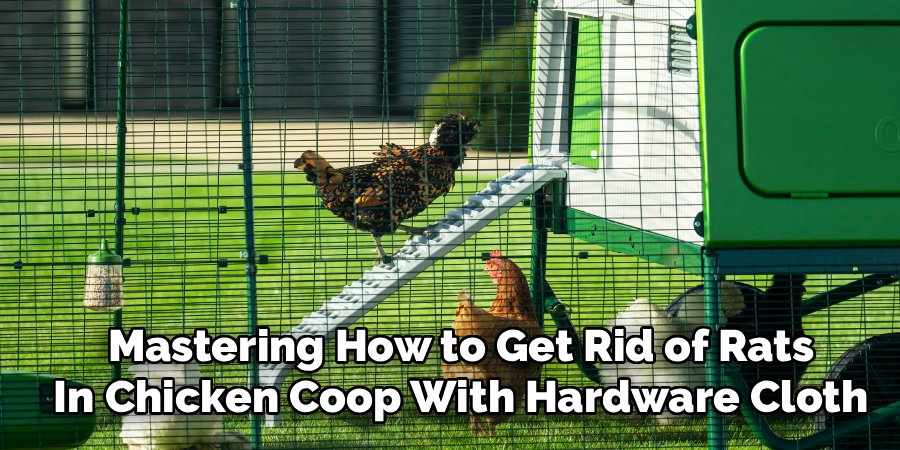
This heavy-duty welded wire mesh is too small for rodents to squeeze through and too tough for them to chew. You should attach this mesh to all windows, vents, and any openings larger than a dime. Knowing how to get rid of rats in chicken coop structures effectively often comes down to this single material upgrade, as it creates an impenetrable physical barrier that standard wire simply cannot provide.
Step 5: Install an L-Shaped Apron Barrier
Rats are prolific diggers and will tunnel underneath walls to gain access to the warmth and food inside your coop. To prevent this, you should install an L-shaped apron of hardware cloth around the entire perimeter of your run. This involves burying the wire roughly twelve inches down or laying it flat on the ground extending out from the coop wall and covering it with soil or gravel. When a rat attempts to dig down near the wall, they hit the wire mesh and cannot proceed.
They generally do not know to back up and start digging two feet away from the wall. This method is often easier than digging a deep trench and provides excellent protection against burrowing predators of all kinds, securing the base of your structure permanently.
Step 6: Eliminate Water Access at Night
Just like food, water is a critical resource for survival, and rats will stay close to a reliable hydration source. Many chicken keepers use open water fonts or bowls, which are easily accessible to rodents. You should switch to nipple waterers, which are much harder for rats to use, or remove water containers entirely at night when the chickens are sleeping.
Chickens do not drink at night, so removing the water does not harm them, but it makes your coop significantly less hospitable to pests. If you have open ponds or standing water nearby, try to limit access or cover them. By removing both food and water, you create a hostile environment that encourages the rats to move on to a location with easier resources.
Step 7: Practicing How to Get Rid of Rats in Chicken Coop Using Snap Traps
Sometimes exclusion and sanitation are not enough, and you must reduce the population actively. Snap traps are effective, but they must be used with extreme caution to avoid injuring your birds or other wildlife. The safest way to use traps is to place them inside a “bait station” or a sturdy box with a small hole that only a rat can fit through.
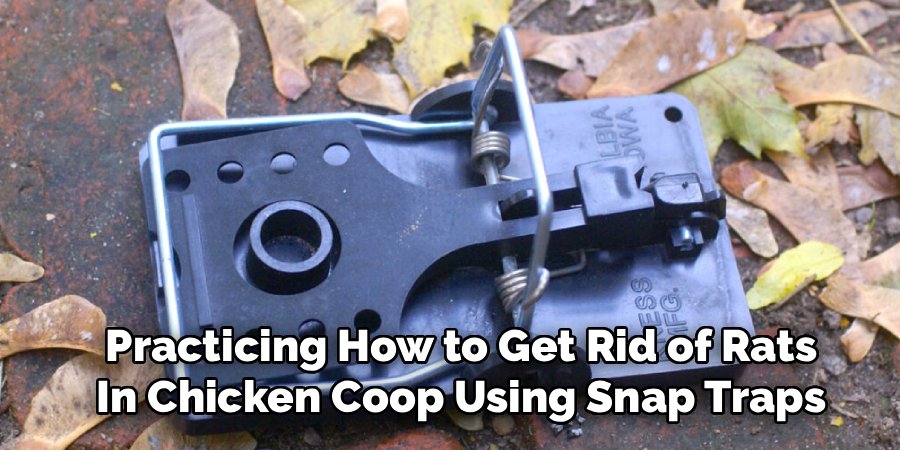
This ensures your chickens cannot peck at the trigger. You should place these trap boxes along the walls where you identified rub marks in step one. Peanut butter or dried fruit makes excellent bait that is hard for them to steal without triggering the trap. Learning how to get rid of rats in chicken coop areas using traps requires patience and daily monitoring to dispose of pests hygienically and reset the devices immediately.
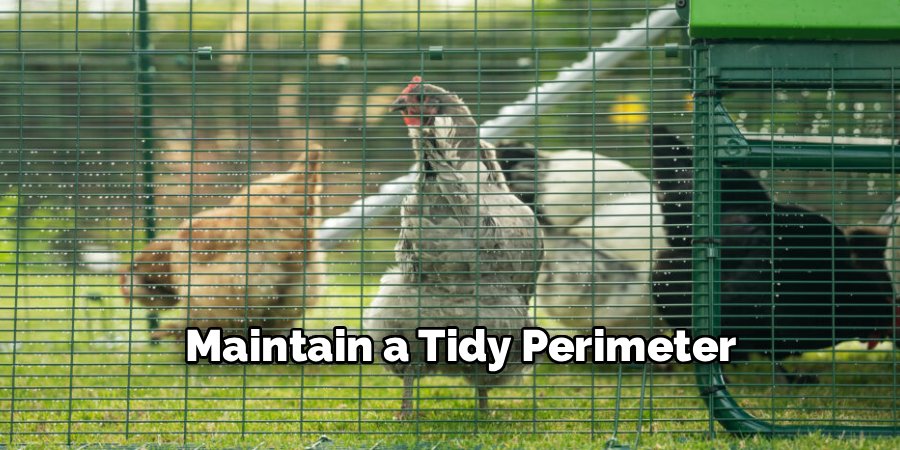
Step 8: Maintain a Tidy Perimeter
Rats hate open spaces where they feel exposed to predators like owls and hawks, so they stick to cover. If you have tall grass, woodpiles, or stacks of unused equipment leaning against your coop, you are providing them with a safe “highway” directly to your chickens. You must keep the grass around your coop mowed short and remove any clutter that sits near the walls.
Elevate any necessary storage items off the ground so there are no dark hiding spots underneath. By clearing a buffer zone of open space around the coop, you make the rats feel vulnerable. They are far less likely to cross an open, tidy yard to get to the coop than they are to scurry through high weeds and debris.
Use Strong Scent Deterrents
Rats have an incredibly sensitive sense of smell, which you can use to your advantage as a supplementary measure. Natural deterrents like peppermint oil, crushed chili pepper, or planting mint around the coop can help discourage them from investigating the area. You can soak cotton balls in potent peppermint essential oil and place them near suspected entry points or nesting areas, ensuring they are out of reach of the chickens.
While scent deterrents rarely solve a full-blown infestation on their own, they work well when combined with the sanitation and exclusion steps listed above. They act as an invisible barrier that makes the environment unpleasant for rodents, adding another layer of defense to your overall strategy.
Frequently Asked Questions
Can Rats Kill My Chickens?
Yes, rats can be dangerous to chickens, particularly at night when birds are roosting and vulnerable. While they prefer easy food sources like grain, large rats have been known to attack and kill baby chicks and small bantam breeds. In extreme cases of food scarcity, a swarm of rats can injure adult standard hens, biting their legs and causing severe infections or stress-induced death.
Is It Safe to Use Rat Poison Around Coops?
No, you should never use rat poison inside or near a chicken coop. Chickens are omnivores and will peck at anything that looks like food, including poison pellets. Furthermore, if a chicken eats a rat that has died from poison, the chicken can suffer from secondary poisoning. It is critical to stick to mechanical traps and exclusion methods to ensure the safety of your flock and the eggs you consume.
Do Rats Steal Chicken Eggs?
Yes, rats are notorious egg thieves and this is often the first sign of a problem. They can roll eggs away to their burrows or eat them right in the nesting box. If you find broken shells, yolk residue in the nests, or notice a sudden drop in egg production without a clear reason, it is highly likely that rodents are stealing the eggs before you can collect them.
What is the Best Bait for Rat Traps?
Peanut butter is widely considered the best bait because it is sticky and emits a strong aroma. Unlike cheese, which can be grabbed and removed, a rat has to work to lick peanut butter off the trigger, increasing the chance of setting off the trap. Other effective options include dried fruit, bacon grease, or even a small piece of dog food glued to the trigger mechanism.
How Small of a Hole Can a Rat Fit Through?
Rats are incredibly flexible and can squeeze through holes much smaller than their body size. An adult rat can fit through an opening the size of a quarter (roughly 0.96 inches), while mice can fit through holes the size of a dime. This is why standard chicken wire is ineffective; you need hardware cloth with openings no larger than half an inch, preferably quarter-inch, to keep them out completely.
Conclusion
Eliminating rodents from your backyard requires patience, diligence, and a multi-faceted approach. By securing food sources, reinforcing your coop with hardware cloth, and maintaining a clean environment, you can drive these pests away and keep your flock safe. Remember that prevention is always easier than removal, so maintain these habits even after the rats seem to be gone.
It is time to take back your coop and ensure your chickens live in a stress-free home. Implement these steps today to see immediate results. Once you understand how to get rid of rats in chicken coop environments properly, you will have the confidence to handle any future pest challenges that come your way.

About
Jovie Mathews is a backyard and outdoor expert writer with over 12 years of hands-on experience transforming neglected outdoor spaces into thriving gardens and functional retreats. Raised in a family where weekends meant digging in the soil and building raised beds from scratch, Jovie developed a genuine love for the outdoors long before it became a career.
She writes with a practical, no-fluff approach — always testing ideas in her own backyard before sharing them with readers. From composting systems and native plant selection to patio design and pest control, Jovie covers the full spectrum of backyard life with equal parts expertise and enthusiasm.
Education
B.Sc. in Horticulture Science
University of Florida (UF) · Gainesville, FL · 2014
IFAS College of Agricultural and Life Sciences
Minor in Environmental Studies
University of Florida (UF) · Gainesville, FL · 2014
College of Liberal Arts and Sciences
Areas of expertise
- Lawn & Garden Care
- Soil prep, planting, seasonal care
- Outdoor DIY Projects
- Raised beds, fencing, pathways
- Composting & Soil Health
- Organic methods, amendments
- Native Plants & Wildlife
- Pollinators, habitat gardening
When she is not writing, Jovie can be found testing new composting techniques, growing tomatoes in questionable quantities, or convincing her neighbors that clover lawns are actually a great idea. She currently gardens in the Pacific Northwest.